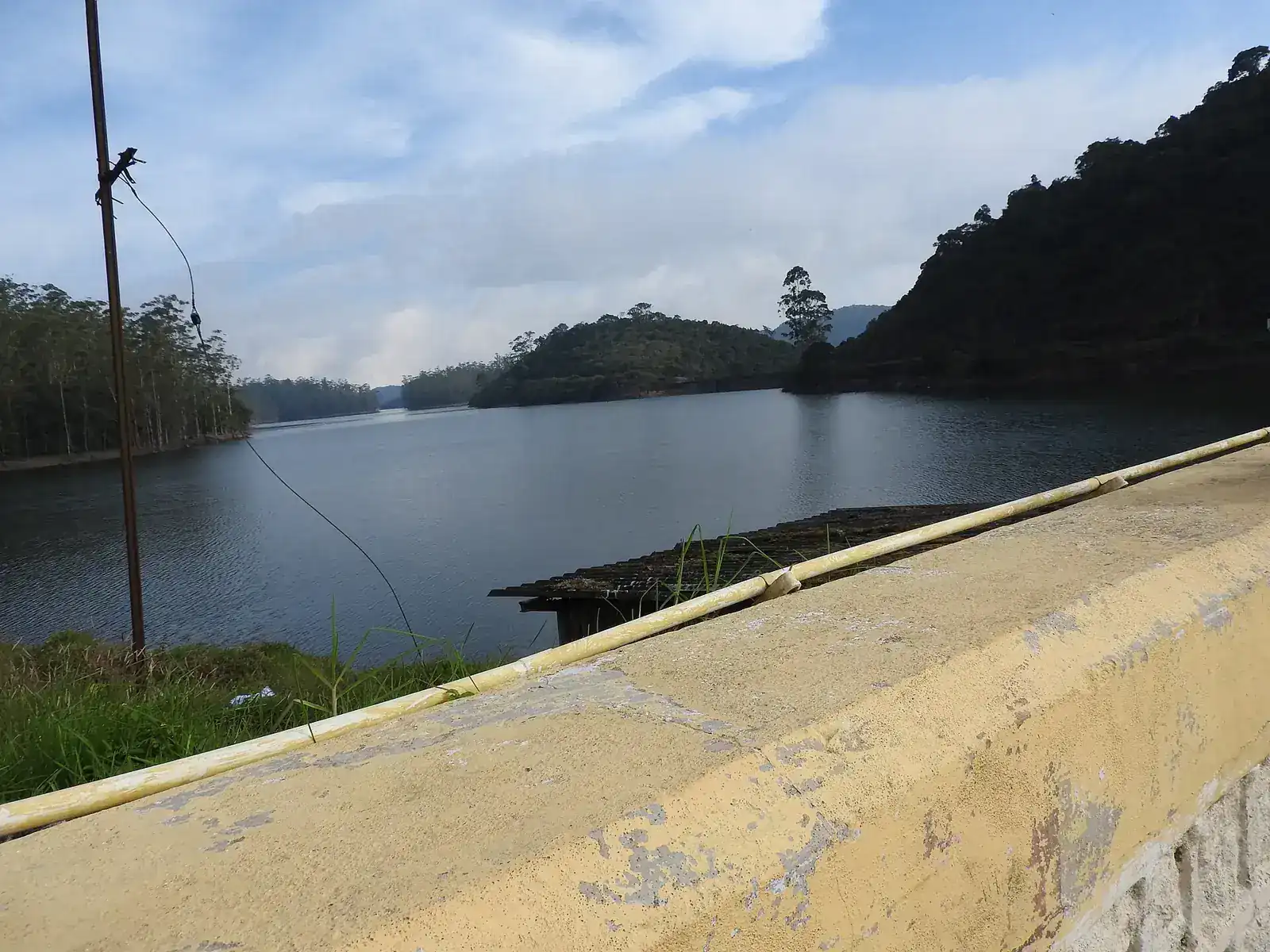
Olakaruvi Falls: the waterfall you have to walk to
Olakaruvi is the only waterfall near Kanyakumari that cannot be reached by car, and that single fact filters out almost everyone. From the last village on the road above Azhagiyapandiapuram, a forest path climbs 3 to 4 km through scrub, then rubber, then proper moist forest to a rock face where the stream drops in two stages into a cold pool. There is no ticket, no shop and no changing room. On a weekday morning in September you will meet a couple of local families, a herd of goats and nobody else. It takes an hour and a quarter up for a fit adult, forty minutes down, and it is the closest thing this district has to a real hike.
The falls are about 30 km from Kanyakumari and the trailhead is 50 minutes by car. The stream runs from the first monsoon rain in June, is strongest from July to January, and thins to a trickle from March to May, when the walk is hot and the pool is a puddle. The forest department keeps a register at the start of the path, closes it in heavy rain and during the fire season, and expects everyone down by 4 pm. Go with the right footwear, enough water and an early start, and it is the most rewarding half day in the district for anyone who likes walking. Go in April in sandals with one bottle of water and it is a hot slog.
The walk: what the path is like, section by section
The path starts at the top of the village where the tarmac ends, beside the forest department board and register. The first kilometre is a broad, stony cart track between fields and cashew scrub, in full sun, climbing gently; it is the least pleasant section and the reason to start before 9 am. The track then enters rubber plantation, narrows to a footpath and steepens, with the stream audible to the right. This middle section is shaded and the surface is roots and packed earth, slippery after rain.
The last kilometre is the forest proper. The path climbs steeply in places over boulders and there are two or three spots where you use hands as well as feet; it is not technical, but it is not a stroll, and anyone with knee trouble will feel the descent. Then the trees open and the falls are in front of you, coming down a broad rock face in two steps into a pool about waist deep on an adult at normal flow. A fit adult takes seventy to eighty minutes up with short stops; families with children of eight or ten take an hour and three-quarters. The route is obvious in daylight and there are painted arrows on rocks at the two places where side paths branch off, but it is not a path to be on after 3:30 pm. Guides from the village offer to walk with you for about ₹300 and are worth it if you are nervous or it is your first time; they also know where the leeches are.
The falls, the pool and what is safe
Olakaruvi is a stream falling over a wide granite face rather than a single plunge, and its character changes with the flow. In August it is a white sheet forty or fifty feet high with spray you feel from twenty metres away. In December it is a series of ribbons over dark rock with the pool clear enough to see the bottom. In April it is a damp stain. The pool at the base is the reward for the walk, and at normal flow it is safe: shallow at the edges, cold, with a sandy and gravel bottom and a gentle outflow. Local families swim here, and children paddle at the edge.
Two things are dangerous. The first is the rock face itself, which people climb to stand under the water for a photograph; it is polished by centuries of flow, has algae in the wet season, and a fall onto the rocks below has caused serious injuries. Stay in the pool. The second is spate. After heavy rain the stream rises fast, the pool becomes a churning brown bowl and the outflow becomes a torrent, and the forest department closes the path for exactly this reason. If the water is brown and loud, look and leave. There are no guards, no phone signal at the falls and a long walk to the nearest help, so the margin for error is smaller than at Thirparappu with its whistle guards. Carry a small first-aid kit, and do not let children out of arm’s reach near the outflow.
Season, timing and what to carry
July to January is the season. July to September gives the most water and the greenest forest, with the most chance of a closure after a heavy night; October and November are full and reliable; December and January are the most comfortable, with good flow, cool mornings and fewer leeches. February is passable. From March to May the stream shrinks to a trickle, the first kilometre is brutal in the sun, and the forest department closes the path on fire-risk days. We do not take guests up in April unless they insist, and then we say plainly what they will find.
Timing within the day is simple: start walking by 8:30, be at the falls by 10, leave the falls by 12, and you are back at the car before the afternoon heat and well within the 4 pm limit. Carry at least two litres of water per person, because there is none on the way that you should drink; a snack or packed breakfast; a change of clothes and a towel in a plastic bag; footwear with grip and closed toes, not sandals; a hat for the first section; and salt for leeches from June to December. A light rain jacket is worth its weight in the monsoon months. Phones lose signal about halfway up, so agree a plan with your driver before you start. Toilets do not exist beyond the village. Everything you carry up, carry down; the pool edge is clean because almost nobody comes, and it stays clean only if that continues.
Getting to the trailhead and putting it into a day
From Kanyakumari, drive through Nagercoil towards Azhagiyapandiapuram and then up a minor road into the hills to the last village, about 30 km and fifty minutes in total; the final five kilometres are narrow and steep, and your driver may need to ask the way at the village junction. There is informal parking at the top of the village for ₹30, and a couple of houses sell tea and biscuits. Buses from Nagercoil reach Azhagiyapandiapuram every half hour, and from there an auto to the trailhead costs about ₹150; without a car, allow an extra hour each way.
Because the walk takes most of a morning and leaves you tired and damp, Olakaruvi does not combine well with a long list of other stops. The plan that works is the trek from 8:30 to 12:30, lunch in Nagercoil or Azhagiyapandiapuram for about ₹130 a head, then one easy afternoon stop on the way back: Suchindram temple if you want something quiet, or Marunthuvazh Malai if your legs still want a hill. Do not book the ferry for the same afternoon; you will not enjoy queueing. As a local trip it falls within the 80 km day: ₹2,800 in a sedan or ₹4,200 in an Innova Crysta, with the driver waiting at the village while you walk. Tell us when you book that you want to do the trek, so we send a driver who knows the village road and the register routine.
Is Olakaruvi for you
This is a walk with a waterfall at the end, not a waterfall you visit. If that sentence appeals, you will like it. Couples and small groups who are reasonably fit, families with children from about eight who are used to walking, and anyone bored of the temple and viewpoint circuit will find it the most satisfying half day near Kanyakumari. Photographers get forest, water and no people. Birdwatchers on the lower path in the first hour after dawn do well.
It is not for everyone, and pretending otherwise wastes people’s mornings. Anyone with knee or hip trouble will find the descent painful. Children under six need carrying on the steep section, and toddlers should not be near the pool. Anyone who wants facilities, a changing room, a shop or a guard should go to Thirparappu instead. In March, April and May the walk is hot and the falls are a trickle; the effort is the same and the reward is not there. Groups on a tight one-day schedule cannot fit it. But for the right visitor in the right month, it is the honest answer to the question we get most often from repeat guests: what is there to do here that is not on every tour bus itinerary. Olakaruvi is that, and the fact that it needs a walk is the reason it stays that way.
Six things our drivers tell every guest
- Start walking by 8:30 am. The first kilometre is in full sun and the forest department wants everyone down by 4 pm.
- Wear closed shoes with grip. The upper path is roots and boulders and is slippery from June to December.
- Carry two litres of water per person. There is nothing to buy beyond the village and no safe water on the path.
- Stay in the pool. The rock face is polished and algae-covered, and falls from it have caused serious injuries.
- If the water is brown and loud after rain, look and leave. The stream rises fast and there are no guards.
- Do not attempt it from March to May. The falls are a trickle and the walk is hot.
How to get here
Olakaruvi Falls is 30 km from Kanyakumari town, 50 min to the trailhead, then a 3 to 4 km walk. It is included in our 3 days 2 nights package, or we can add it to any local sightseeing day by the hour.
Questions about Olakaruvi Falls
Nearby places to add to the same day
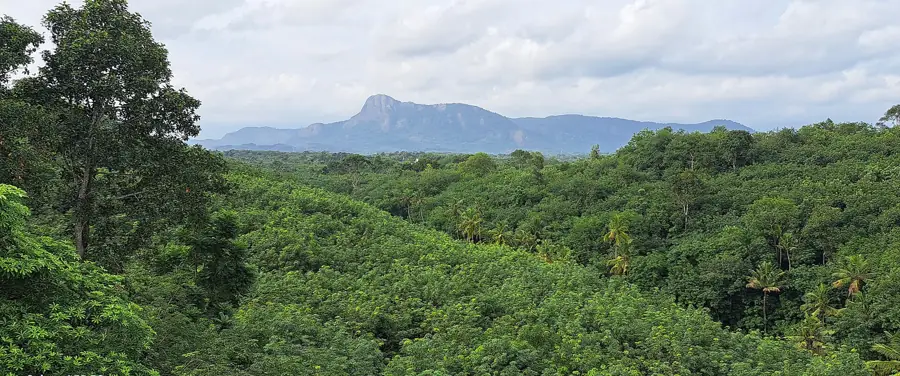 7 km
7 kmMarunthuvazh Malai
Marunthuvazh Malai is 7 km from Kanyakumari, a 20 to 30 minute climb up the herb hill of Sanjeevani legend. Free, and best climbed before 8.30 am.
 12 km
12 kmThanumalayan Temple
Suchindram’s temple has four musical pillars carved from one stone and an 18 ft Hanuman cut from a single granite block, 12 km from Kanyakumari.
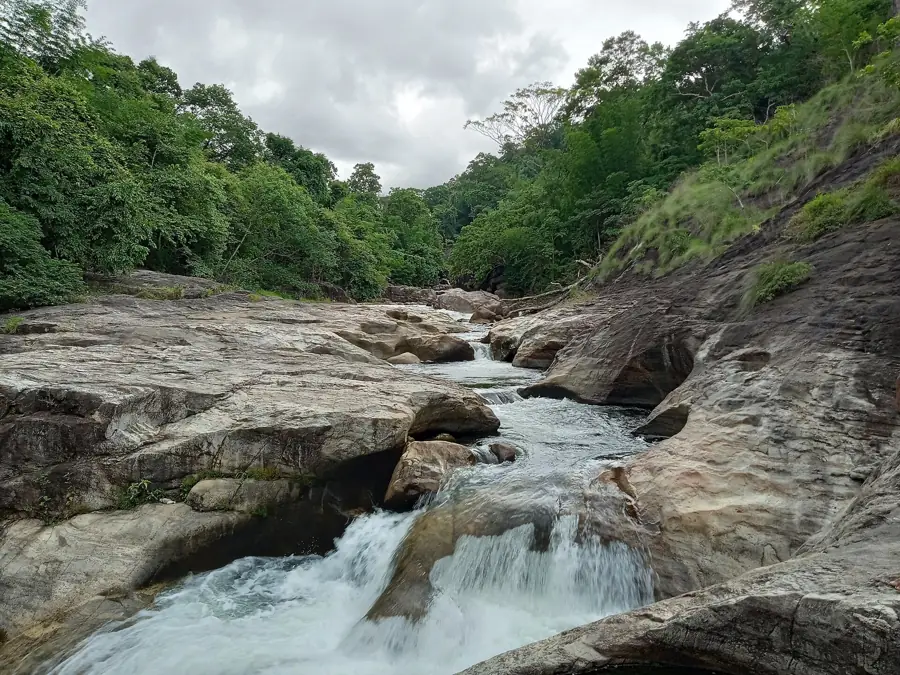 45 km
45 kmKalikesam
Kalikesam is 45 km from Kanyakumari, a shallow forest stream with a temple and bathing pools. Entry ₹10, open 8 am to 5.30 pm. Mind the monkeys.
Want Olakaruvi Falls at the right hour?
We know when the queue is short and when the light is good. One message and it is in your plan.