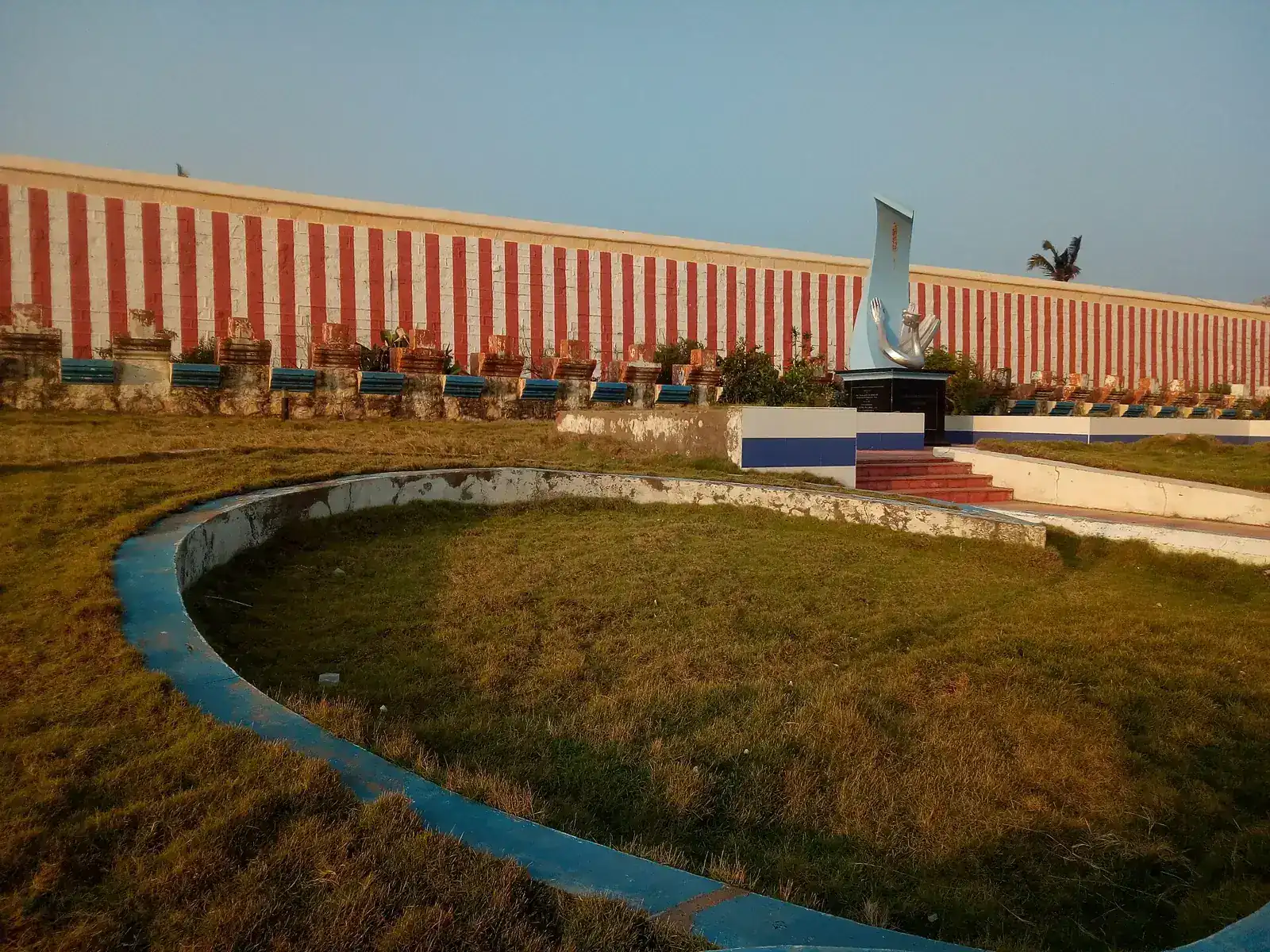
A quiet marker for the day the sea came in
On 26 December 2004, the Indian Ocean tsunami struck the coastline of Kanniyakumari district along with much of the region, and the waves killed hundreds of people in fishing villages and coastal settlements along this stretch of shore. The memorial in Kanyakumari town stands on the shore road as a marker of that day, a modest structure rather than a large monument, and it is the kind of place best treated as a brief, reflective pause rather than a sightseeing stop with things to photograph.
It sits within easy walking distance of the main shore-road sights, the Amman temple, Gandhi Mandapam and the ferry jetty, so most visitors fold it into the same walk rather than making a special trip to see it. There is no fee and no set hours; it is simply there on the shore, open to anyone who wants to stop for a few minutes. For visitors who lived through or remember the events of that December, or who have family connections to the fishing communities along this coast, it carries considerably more weight than its modest size suggests, and it is worth allowing a few quiet minutes here rather than rushing past on the way to somewhere louder.
What happened here in December 2004
The Indian Ocean tsunami was triggered by a massive undersea earthquake off the coast of Sumatra on 26 December 2004, and the resulting waves struck coastlines across the Indian Ocean, including the entire eastern and southern coast of Tamil Nadu. Kanniyakumari district, at the southern tip of the mainland and exposed to open ocean on more than one side, was among the affected areas, and the fishing communities along this coast, whose livelihoods depend on being close to the water, suffered particularly heavy losses. Hundreds died across the district in a matter of minutes, with entire stretches of coastal housing and fishing infrastructure destroyed. The scale of the event reshaped coastal planning and fishing community life along this shore for years afterwards, and it remains within living memory for a large part of the local population, which is part of why the memorial here is treated with genuine respect rather than as a routine tourist stop by residents and visitors alike.
What the memorial actually looks like
This is a modest structure rather than a large monument, standing directly on the shore road among the other memorials and shrines that line this stretch of Kanyakumari town. There is no museum, no visitor centre and no extended exhibition attached to it; it functions as a simple marker rather than an interpretive site, and visitors expecting a detailed account of the events or a memorial on the scale seen in some other tsunami-affected regions should adjust their expectations accordingly. What it offers instead is a quiet point to stop, read the marker, and reflect for a few minutes on an event that affected this exact stretch of coastline directly. It requires no ticket, no set visiting hours and no particular preparation, and most visitors spend well under fifteen minutes here, which is entirely in keeping with its function as a brief pause rather than a planned activity within a longer day.
Why this is not a stop to rush through
It is tempting, on a day packed with ferries, temples and viewpoints, to walk past this memorial in under a minute without really registering it, and a good number of visitors do exactly that. We would suggest otherwise. This is one of the very few stops in Kanyakumari that is not primarily about a view, a photograph or a ticket, and treating it with the same brisk pace as the rest of a sightseeing day misses the point of it entirely. A few minutes of quiet here, particularly early in the morning before the shore road gets busy, gives a different texture to a day that is otherwise fast-moving and crowded. For visitors travelling with older family members who remember December 2004 directly, this stop often means considerably more than any of the ticketed sights nearby, and it is worth building in the time for that rather than treating it purely as a box to tick on the way past.
Getting there and combining it with the shore walk
The memorial sits on the same shore road as Gandhi Mandapam, the Kamaraj Memorial and the approach to the Bhagavathy Amman Temple, all within a few hundred metres of each other on flat, walkable ground. There is no dedicated parking area, and none is really needed, since it fits naturally into the same walk most visitors are already making between the ferry jetty and the temple. Our drivers drop at the same police barrier used for the other shore-road stops, and the walk from there covers this memorial along with the others in a single loop. It adds only a few minutes to a walk you are making anyway, which is exactly why it is worth including rather than skipping for the sake of time saved, and it costs nothing extra beyond the short detour on foot, whether you are walking from the temple side or coming up from the ferry jetty itself.
A note on the fishing communities today
Twenty years on, the fishing communities along this coast have rebuilt, and the harbour and boat activity visible from the shore road today is a reminder that the sea here is both a livelihood and, on one specific day, a source of enormous loss. Talking to a local driver or guide about the events of December 2004, if they are willing to share it, often adds more understanding than the memorial marker alone can provide, since many families along this coast have direct personal connections to that day. This is not offered as a sales pitch for conversation, simply an observation that the memorial makes more sense within the context of the working coastline around it than as an isolated stop, and visitors who take a few extra minutes to look at the fishing boats and harbour activity nearby often come away with a fuller sense of what the day actually meant here.
Six things our drivers tell every guest
- Treat this as a quiet, reflective stop rather than a sightseeing photo opportunity.
- It adds only a few minutes to the same shore-road walk that covers Gandhi Mandapam and the temple.
- There is no museum or exhibition attached — it is a simple marker, not an interpretive centre.
- Early morning, before the shore road gets busy, is the best time for a few quiet minutes here.
- Ask a local driver or guide about December 2004 if you want context beyond the marker itself.
- No fee, no fixed hours — it is open to anyone who wants to stop along the shore road.
How to get here
Tsunami Memorial is in town, 6 min walk from the bus stand. It is included in our one-day sightseeing package and our 2 days 1 night package, or we can add it to any local sightseeing day by the hour.
Questions about Tsunami Memorial
Nearby places to add to the same day
 In town
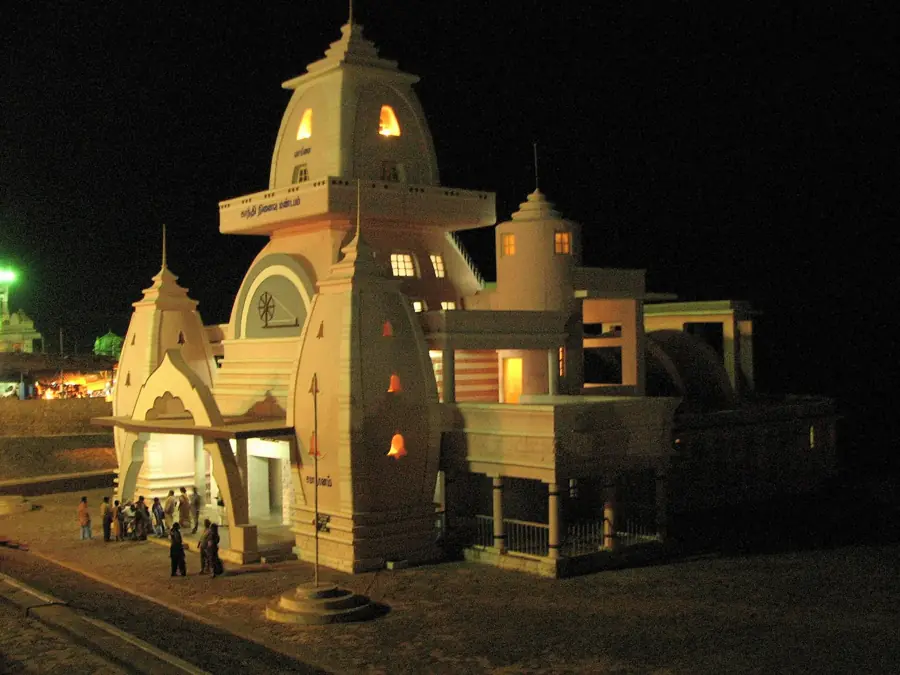
Gandhi Mandapam
Built in 1956 in Odisha style, Gandhi Mandapam has a roof aperture that lets sunlight fall on the ash-keeping spot every 2 October, his birthday.
In townKamaraj Memorial
Kamarajar Mani Mandapam holds the ashes of K. Kamaraj, Tamil Nadu’s former chief minister, in a free ten-minute stop right beside Gandhi Mandapam.
 In town
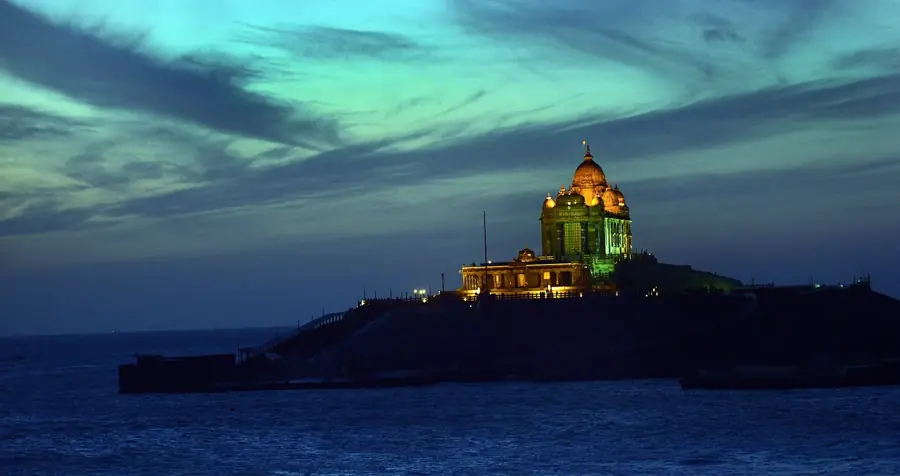
Bhagavathy Amman Temple
Kumari Amman Temple opens 4:30 am–12:15 pm and 4–8:15 pm. Men remove upper garments, cameras stay outside, and the nose ring has a sea legend.
Want Tsunami Memorial at the right hour?
We know when the queue is short and when the light is good. One message and it is in your plan.