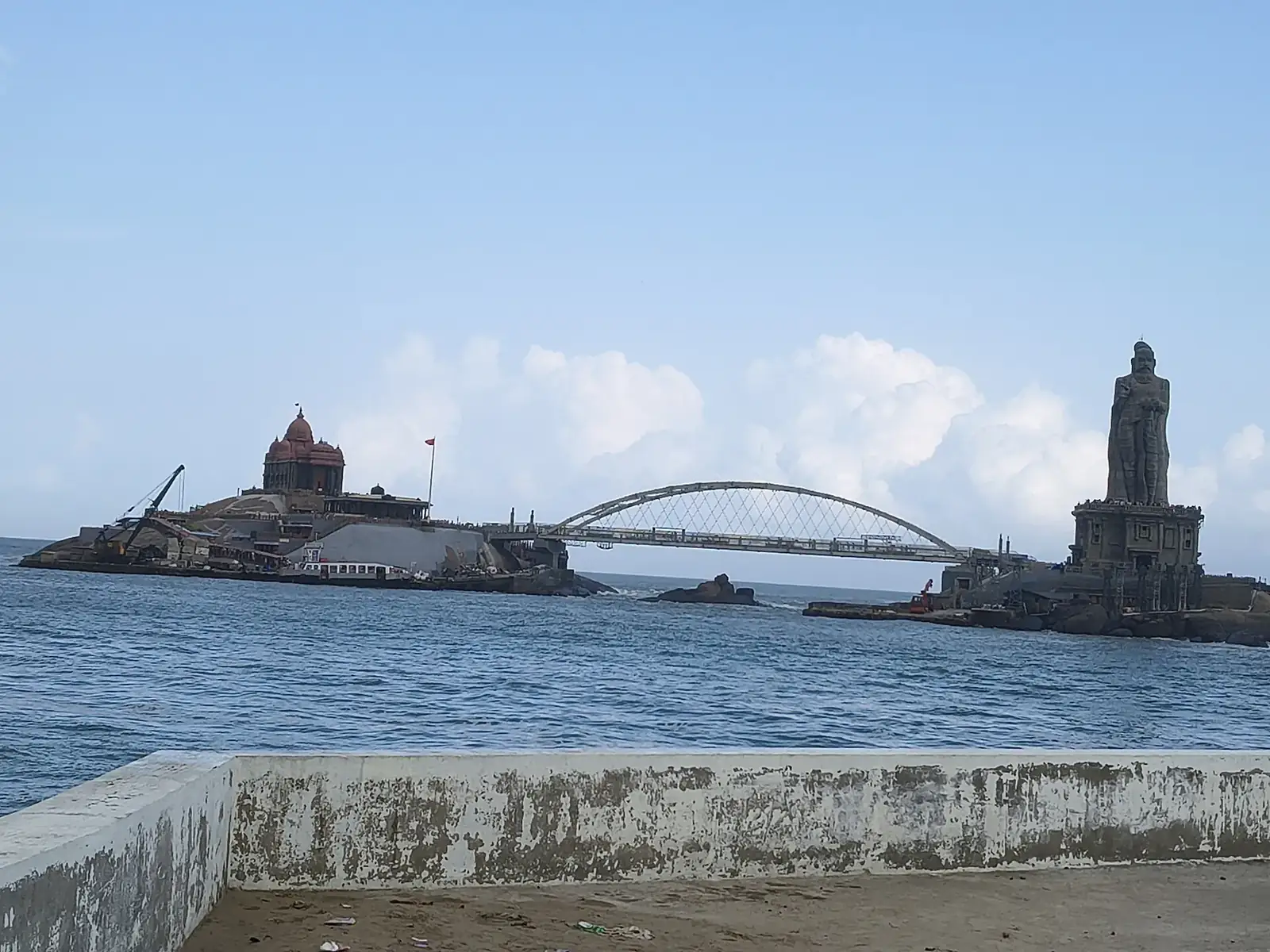
Walking the glass floor between the two rocks
The glass bridge opened in stages between late 2024 and early 2025 and runs about 77 metres across open sea, joining the rock that carries the Vivekananda Memorial to the rock that carries the Thiruvalluvar Statue. Before it existed, the ferry called at each rock in turn and many visitors skipped the statue rather than queue for a second boat. One ferry ticket now gets you onto both rocks, and the bridge is a separate ticket of about ₹40, bought from a small counter on the rock rather than at the mainland jetty. The floor is toughened glass laid in panels, with a solid walkway down each side for anyone who would rather not look straight down at the water.
It is a short walk, not a destination in its own right — allow twenty minutes with photographs, less without. Staff keep the queue moving rather than letting anyone linger with a tripod, which is banned along with drones and any large bag on a shoulder strap. Around sunset the bridge closes for a short window while the crowd changes over between the rock side and the statue side, so build in ten spare minutes if timing the crossing for evening light. Our drivers now tell every ferry customer to budget the extra ticket and the extra hour, because expecting the old one-rock visit and finding a second stop tacked on is the most common surprise of the day.
What the ₹40 actually buys you
The ferry ticket only ever covered the crossing to the rocks; the bridge is billed and sold separately, and the counter for it sits on the Vivekananda Rock side rather than on the mainland. You cannot buy it in advance and there is no combined pass, so carry small notes rather than expecting change from a large one at a kiosk with a queue behind you. What you get for the money is the crossing itself, roughly 77 metres of glass and steel with railings on both sides, plus the right to walk back the same way later if you want a second look with different light. It is not a ride and there is no time limit once you are on it, though staff discourage stopping in the middle for long photo sessions when the deck is busy. Compared with the ₹75 return ferry and the ₹50 memorial entry, the bridge is the smallest line item of the day, and most visitors who skip it later say they regret it, because the walk is the only place in Kanyakumari where you are genuinely suspended over the sea rather than standing on rock or sand.
Standing on the glass without the stomach drop
The panels are thick and do not flex, but the sensation of open water moving under your feet catches people out even when they know it is coming. Children generally enjoy it more than the adults walking with them. If you are uneasy with heights or moving surfaces, keep to the solid walkway at either edge, which runs the full length and gives you the same crossing without the glass underfoot — nobody is required to step onto the transparent sections. Footwear stays on here, unlike the bare-stone terraces at the memorial and the statue, because the glass is designed to be crossed shod and grip is part of the safety design. Midday sun on the panels can throw a hard glare upward, which some visitors find more disorienting than the height itself, so a pair of sunglasses helps more than it sounds like it would. Staff at both ends are used to people freezing halfway and will walk out to bring someone back rather than let a queue build behind them, so there is no shame in turning around and simply admiring the Thiruvalluvar Statue from where you stand.
Why it was built and what it replaced
For decades the ferry served the two rocks as two separate stops on the same trip, and boarding again at the memorial rock to reach the statue added a wait that put a lot of visitors off making the second landing at all. The bridge was built to remove that second boarding entirely, turning what used to be a choice between two separate queues into a single continuous walk. It also changed the shape of a visit to the rocks: what was once roughly an hour is now closer to two, because almost everyone who lands now completes the full loop rather than picking one rock over the other. The knock-on effect is a longer morning queue at the mainland jetty, since fewer people turn around quickly and free up the boats. If your day is tight, that trade-off is worth knowing before you commit to the first ferry slot, and it is exactly why the Vivekananda Rock Memorial now needs a fuller morning than it used to.
Rules on the bridge: what is and is not allowed
Tripods, selfie sticks longer than an arm’s reach, and any monopod are stopped at the entrance, mainly because a crowded deck with rigid equipment slows everyone down. Drones are banned across the whole rock complex, not only the bridge, and this is enforced by the staff on duty rather than left to signage. Food and drink are not allowed on the deck, and there are no bins on the bridge itself, so finish anything you are carrying before you join the queue. Large backpacks and anything on wheels are turned away at the counter; a small bag worn on the front is fine. Photography with a phone or a compact camera is not restricted, and this is in fact the one place on the whole trip where staff rarely hurry a couple taking a normal photo. The rule that catches out the most visitors is the food ban, since the queue for the counter is long enough that people arrive with a snack in hand, only to have to eat it standing at the barrier before they are let through.
Best time to cross and photograph it
Late morning, once the first ferry’s rush has thinned but before the afternoon boats arrive, gives you the emptiest deck and the clearest light straight down through the panels. Early morning crossings look flat because the sun is still low and behind the mainland; by eleven it is overhead and the glass photographs well from directly above. Avoid the hour either side of sunset if you dislike crowds, because that is when the bridge briefly closes for the changeover and a queue forms at both ends waiting for it to reopen. Overcast days actually suit the glass panels better for photography than harsh sun, which bounces a white glare off the surface. If height and glare do not bother you, standing still in the middle for thirty seconds gives the clearest sense of the sea moving beneath the deck, which is the one thing no photograph quite manages to capture on its own.
Six things our drivers tell every guest
- Buy the bridge ticket on the rock itself — there is no counter for it at the mainland jetty.
- Carry small notes; the counter queue moves faster with exact change.
- Tripods, selfie sticks and drones are turned away at the entrance.
- Footwear stays on for the crossing, unlike the bare-stone terraces either side.
- The bridge closes briefly around sunset for the crowd changeover — build in ten minutes.
- Finish any food before joining the queue; nothing is allowed on the deck.
How to get here
Glass Bridge is 500 m offshore from Kanyakumari town, reached only by the government ferry. It is included in our one-day sightseeing package and our 2 days 1 night package, or we can add it to any local sightseeing day by the hour.
Questions about Glass Bridge
Nearby places to add to the same day
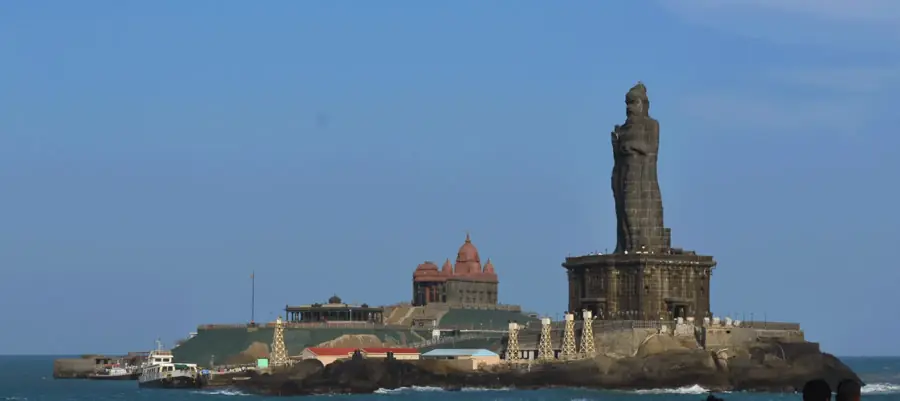 500 m offshore
Vivekananda Rock
Ferry to the Vivekananda Rock runs 8 am to 4 pm, ₹75 return. Why the 8 am boat saves you ninety minutes of queue, and what to see on the rock.
 500 m offshore
Thiruvalluvar Statue
The 133 ft Thiruvalluvar Statue stands on its own rock, reached by the same ₹75 ferry. Why the number 133 matters and where to photograph it from.
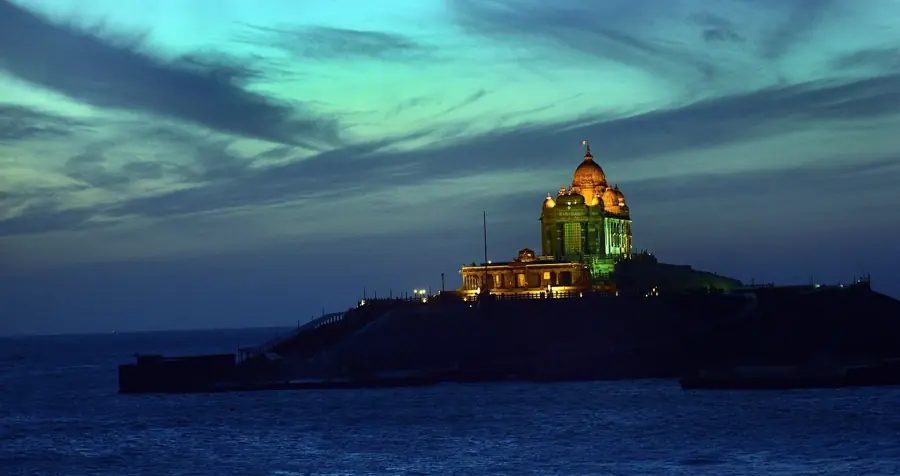 In town
Bhagavathy Amman Temple
Kumari Amman Temple opens 4:30 am–12:15 pm and 4–8:15 pm. Men remove upper garments, cameras stay outside, and the nose ring has a sea legend.
Want Glass Bridge at the right hour?
We know when the queue is short and when the light is good. One message and it is in your plan.