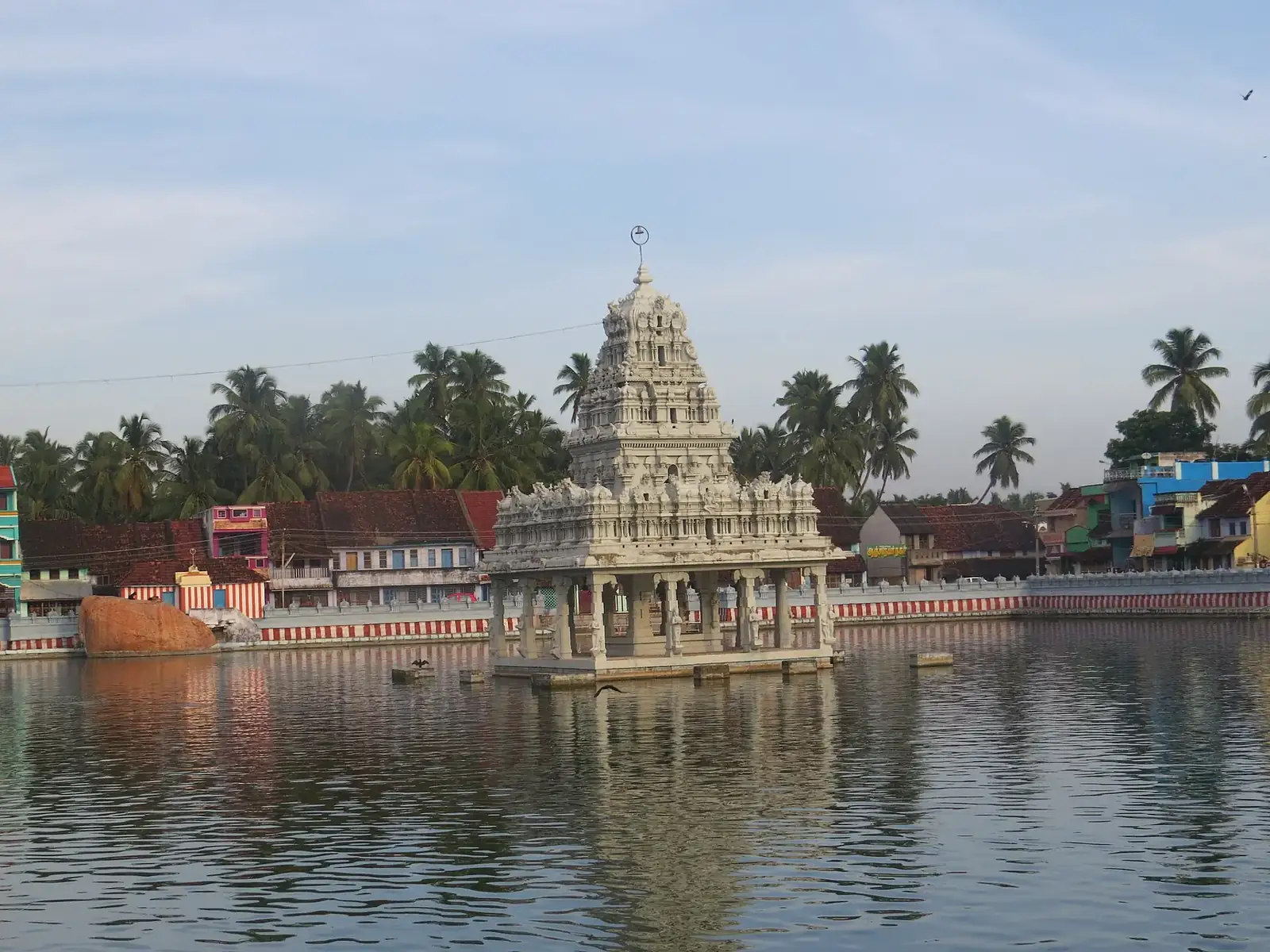
One temple, three gods, and pillars that ring like bells
Suchindram’s Thanumalayan Temple is unusual even by the standards of a district full of old temples, because it is dedicated jointly to Shiva, Vishnu and Brahma together rather than to one deity, and the name itself reflects that combination. It sits twelve kilometres from Kanyakumari, a twenty-minute drive, and is large enough to need a genuine hour rather than the twenty-minute stop many town temples get. Two features draw visitors specifically: a set of four musical pillars carved from a single block of stone, each producing a different note when struck, and an eighteen-foot Hanuman statue carved from one piece of granite, among the tallest such single-stone figures in the south.
Like the Amman temple in town, a dress code applies and men remove upper garments before entering the inner areas. The complex is large, with a tall gopuram, extensive corridors and multiple shrines, and it rewards slower walking rather than a rushed circuit. Timings run in two blocks with a midday closure, similar to the town temple, so mid-morning before noon is the practical window for a visit that does not get cut short. It is a genuine architectural stop as much as a religious one, and worth building into a half-day loop with Vattakottai Fort rather than treating as an afterthought.
The musical pillars, and how to hear them
The four pillars stand together in one hall, cut from a single block of granite rather than assembled from separate pieces, and each produces a distinct musical note when tapped, traditionally said to correspond to different instruments. Temple staff or an accompanying priest will sometimes demonstrate this on request, tapping each pillar in turn to show the different tones, though it is not performed automatically for every visitor and asking politely usually gets a demonstration rather than waiting for one to happen. The engineering behind a single piece of stone producing genuinely different resonant notes is the real point of interest here, more than any specific legend attached to it, and it is worth pausing at this hall rather than walking past it as one more corridor of pillars. Photography rules vary inside the complex and are stricter in some inner sections than others, so ask before assuming a shot is permitted, particularly near the main sanctum rather than in the outer pillared halls where rules are generally more relaxed.
The eighteen-foot Hanuman
Carved from a single block of granite, the Hanuman figure here is among the tallest monolithic Hanuman statues in the south, and its scale is more striking in person than in any photograph, since the low ceiling height of the surrounding corridor makes the figure feel even larger by comparison. It stands in its own shrine within the larger complex rather than at the main entrance, so first-time visitors sometimes miss it if they do not know to look for it specifically, and it is worth asking a guide or temple staff to point the way if you are pressed for time and want to prioritise seeing it. The single-block carving is the detail that makes this statue notable regionally, in the same way the musical pillars are notable for being cut from one piece rather than assembled — a recurring theme at this temple of stonework pushed to an unusual scale from a single source rather than built up from smaller pieces.
Why three gods share one temple
The joint dedication to Shiva, Vishnu and Brahma is unusual enough that it is the first thing most temple guides explain, since separate temples for each deity are far more common across Tamil Nadu than a single shared sanctum. The name Thanumalayan itself is built from references to all three, and the temple’s layout reflects the combination with separate shrine areas connected within one large complex rather than one deity simply given precedence over the others. This makes Suchindram a genuinely different stop from the Amman temple in Kanyakumari town or the Nagaraja temple near Nagercoil, both of which are dedicated to a single deity, and it is worth mentioning to visitors interested in temple architecture specifically because the shared dedication shaped decisions about the building’s scale and layout in ways a single-deity temple would not have required. It also explains why the complex feels considerably larger and more layered than a typical single-shrine town temple.
Dress code and practical rules
As at the Amman temple in Kanyakumari town, men must remove any upper garment before entering the inner precincts, and the rule is enforced at the gate rather than left to individual discretion. Women are expected to dress modestly, with a sari or long skirt and covered top the norm. Footwear comes off at a stand near the outer wall well before the inner corridors, and the stone floor in the open sections gets hot by late morning, so plan around that if visiting in April or May specifically. Camera and phone rules are more nuanced here than at the Amman temple, with photography generally allowed in the outer courtyards but restricted or fee-based in some inner sections, so check at the entrance rather than assuming either way. The complex is large enough that a slow walk-through, rather than the temple’s own suggested route, is the better way to see the musical pillars and the Hanuman shrine without missing either.
Combining it with the rest of the day
Twelve kilometres and about twenty minutes from Kanyakumari, Suchindram sits naturally on the same half-day loop as Vattakottai Fort, and the two make a good pairing precisely because they are architecturally different — a granite sea fort and a three-god temple complex, both away from the crowds of the town centre. It also lies on the route toward Nagercoil, so a full-day circuit taking in both this temple and the Nagaraja temple, with the fort in between, covers a genuinely varied stretch of the near circuit without much backtracking. Our half-day and full-day tours both route through Suchindram for exactly this reason, and mid-morning before the midday closure is the slot we build the stop around, since a temple this size deserves more than the twenty minutes a rushed itinerary sometimes allows it, and cutting it short is the single most common regret we hear afterwards from customers who booked only a quick photo stop.
Six things our drivers tell every guest
- Visit mid-morning, before the roughly noon closure — the complex is too large to rush through in a short window.
- Ask staff to demonstrate the musical pillars; it is not performed automatically for every visitor.
- The Hanuman shrine sits within the complex rather than at the entrance — ask if you are short on time.
- Men remove upper garments at the gate; the rule is enforced, not optional.
- Photography rules differ by section — check before assuming a shot is allowed near the main sanctum.
- Combine it with Vattakottai Fort on the same half-day loop for a varied, uncrowded morning.
How to get here
Thanumalayan Temple is 12 km from Kanyakumari town, 20 min by road. It is included in our one-day sightseeing package and our temple circuit package, or we can add it to any local sightseeing day by the hour.
Questions about Thanumalayan Temple
Nearby places to add to the same day
 7 km
Vattakottai Fort
An 18th-century granite sea fort 7 km from Kanyakumari, built under Marthanda Varma’s Dutch commander De Lannoy, ASI-protected, best seen late afternoon.
 20 km
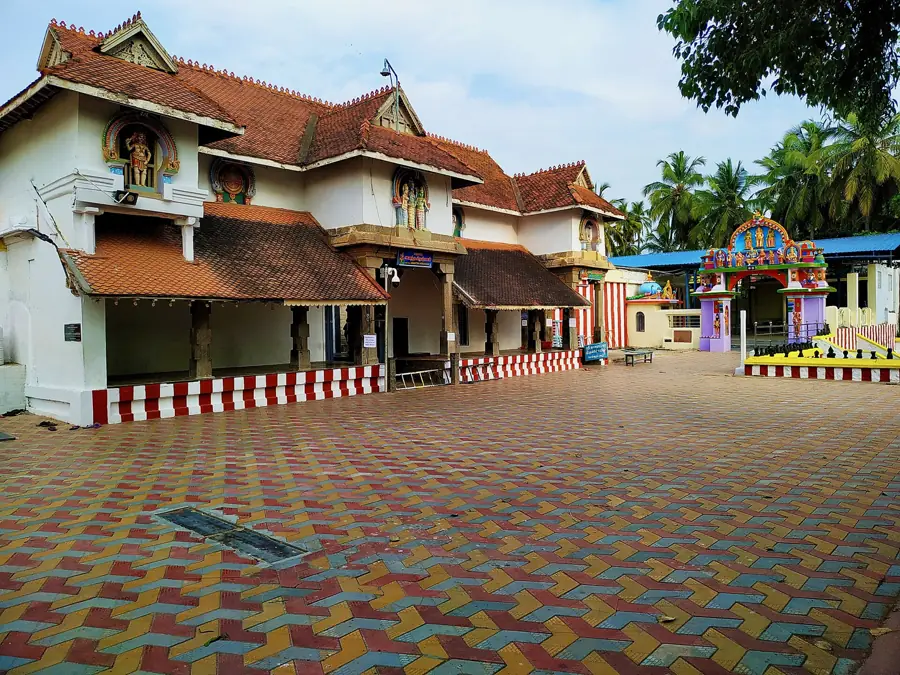
Nagaraja Temple
Nagaraja Temple gives Nagercoil its name and its sand-floored sanctum. 20 km from Kanyakumari, its architecture shows unusual Jain and Buddhist influence.
 45 km
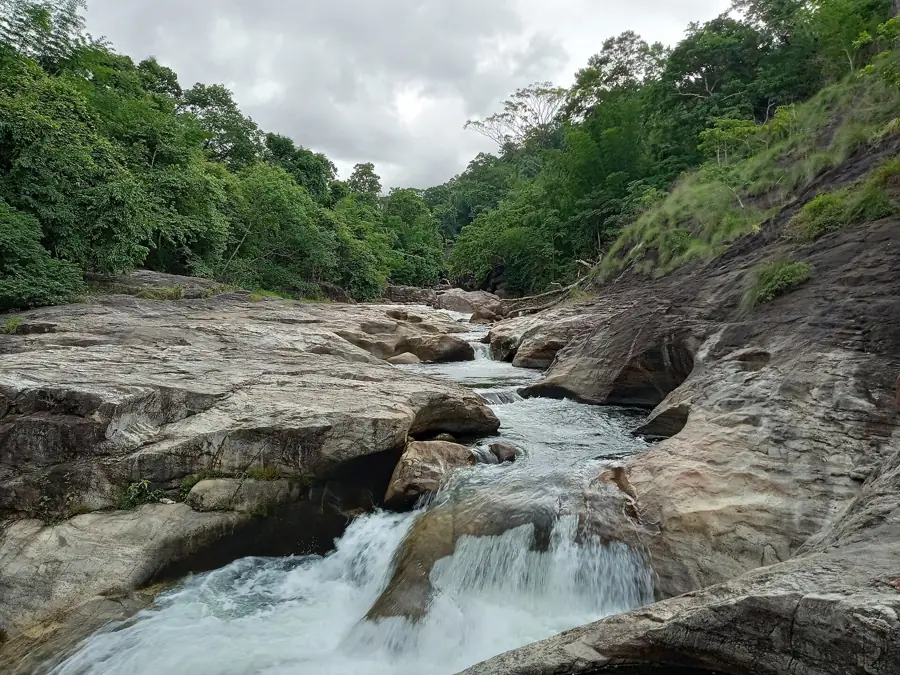
Kalikesam
Kalikesam is 45 km from Kanyakumari, a shallow forest stream with a temple and bathing pools. Entry ₹10, open 8 am to 5.30 pm. Mind the monkeys.
Want Thanumalayan Temple at the right hour?
We know when the queue is short and when the light is good. One message and it is in your plan.