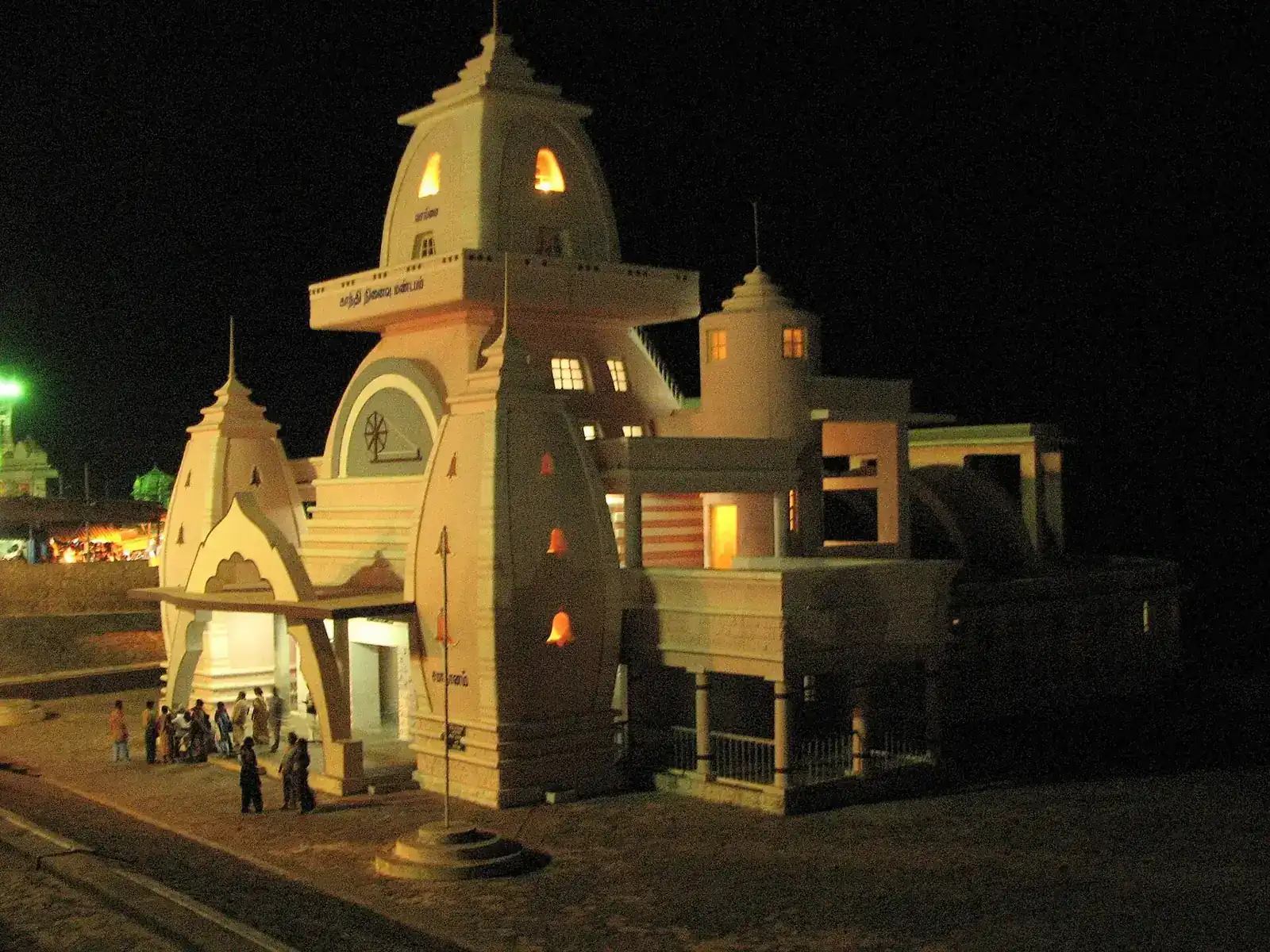
A short stop for the man who reshaped Tamil Nadu politics
K. Kamaraj served three terms as Chief Minister of Tamil Nadu between 1954 and 1963 and is remembered nationally for expanding primary education across the state and for the political influence he later held within the Indian National Congress, including his role in the selection of two prime ministers. His ashes are kept at this memorial, a plain hall standing immediately beside Gandhi Mandapam on the Kanyakumari shore road, built as a mark of respect for a leader whose reach extended well beyond the state he governed.
There is little to see here beyond the memorial platform itself and a small set of photographs describing his career, and most visitors treat it as a two-minute add-on to Gandhi Mandapam rather than a separate stop, since the two buildings share the same short stretch of the shore road and the same open, walkable courtyard. Entry is free and there is no queue at any time of day. For visitors unfamiliar with Tamil Nadu’s political history, a driver or guide explaining who Kamaraj was and why he is honoured here adds more value than the building alone, since there is little on-site signage aimed at an outside audience.
Who Kamaraj was and why he is remembered here
Kumaraswami Kamaraj was Chief Minister of Tamil Nadu across three terms between 1954 and 1963, a period locally credited with a major expansion of free primary schooling and the mid-day meal scheme that later became a national model. He resigned as chief minister in 1963 as part of what became known as the Kamaraj Plan, encouraging senior Congress leaders to step back from government posts to strengthen the party organisation, and his political judgment was widely credited with the selection of two subsequent prime ministers. He remained a significant national political figure until his death in 1975. For visitors without a background in Tamil Nadu’s twentieth-century politics, the name on this memorial means little without context, and that context is exactly what most on-site information skips over. Asking a local guide or driver to explain his significance turns a plain memorial hall into a genuinely useful five minutes of regional history, which is more than the building’s own signage offers on its own, much like the story behind Gandhi Mandapam next door.
What the memorial itself looks like
The hall is modest, in keeping with Kamaraj’s own reputation for personal simplicity despite his political stature, and it holds a marked platform over the spot where his ashes are kept, along with a small wall display of photographs from his career. It shares its architectural language loosely with the Gandhi Mandapam next door, though it is smaller in scale and gets noticeably less foot traffic, since most visitors walking the shore road stop at the more prominent building first and treat this one as an afterthought if they notice it at all. There is no separate entrance queue and no fee, and the two memorials are close enough that walking between them takes under a minute. Shoes come off at the door, as at Gandhi Mandapam, and photography is generally permitted inside without restriction, making this one of the easier stops in town for a quick, respectful look without any of the queueing or dress-code complications found at the Amman temple nearby.
Why it sits beside Gandhi Mandapam
The pairing is not accidental. Both memorials mark places connected to figures whose ashes passed through or were kept at Kanyakumari before wider distribution or immersion, and locating them within the same short stretch of shore road created a small, walkable corridor of national memory rather than two unrelated sites. It also reflects a genuine historical link between the two men: Kamaraj was a committed Congress figure through the independence movement and after, and honouring him within sight of the Gandhi memorial was a deliberate statement about that continuity rather than an administrative accident of available land. For visitors, the practical upshot is convenience rather than symbolism — two short, free, low-effort stops covered in the time it takes to see one, with a shared shaded courtyard between them that offers a rare patch of quiet on an otherwise busy shore road, and a natural pause point between the ferry jetty and the Amman temple further along.
How much time to actually give it
Ten minutes is enough for almost everyone, and that estimate assumes you are also reading the photograph captions rather than walking straight through. There is no separate ticket, no guide stationed on site, and nothing that meaningfully changes between a morning and an afternoon visit, so timing is dictated entirely by whatever else is on your shore-road walk that day. Visitors with a specific interest in Tamil Nadu’s political history, or those travelling with an older generation who remember Kamaraj’s tenure directly, tend to linger closer to twenty minutes and often have their own stories to add about the man rather than reading them off the wall. For everyone else, this is very much the secondary stop on this stretch of road, worth the extra ninety seconds once you are already at Gandhi Mandapam rather than a destination that justifies a special trip of its own on a tight schedule.
Practical notes for the visit
There is no separate parking area; the same drop-off used for Gandhi Mandapam and the Amman temple works here, and our drivers treat this whole stretch as one stop rather than three, waiting at a single point while you cover all of it on foot rather than being shuttled between three kerbside stops. There are no toilets or refreshment stalls immediately at the memorial itself, though the shore road nearby has both within a couple of minutes’ walk. The site is fully step-free and shaded for a good part of the day, making it one of the more comfortable short stops for elderly visitors who find the temple queues or the ferry crossing difficult to manage. Nothing here requires advance planning: no booking, no fee, no seasonal closure, and no queue at any time we have observed, which makes it an easy addition to a morning that is otherwise tightly scheduled around the ferry and the temple timings.
Six things our drivers tell every guest
- See it together with Gandhi Mandapam next door — walking between the two takes under a minute.
- Ask your driver or a guide who Kamaraj was; the on-site signage assumes local knowledge.
- Shoes come off at the door, but photography inside is generally allowed.
- There is no separate parking or drop-off; use the same stop as Gandhi Mandapam.
- Ten minutes is enough unless you have a specific interest in Tamil Nadu’s political history.
- The shaded courtyard here is one of the quieter, cooler spots on the shore road at midday.
How to get here
Kamaraj Memorial is in town, 8 min walk from the bus stand. It is included in our one-day sightseeing package and our 2 days 1 night package, or we can add it to any local sightseeing day by the hour.
Questions about Kamaraj Memorial
Nearby places to add to the same day
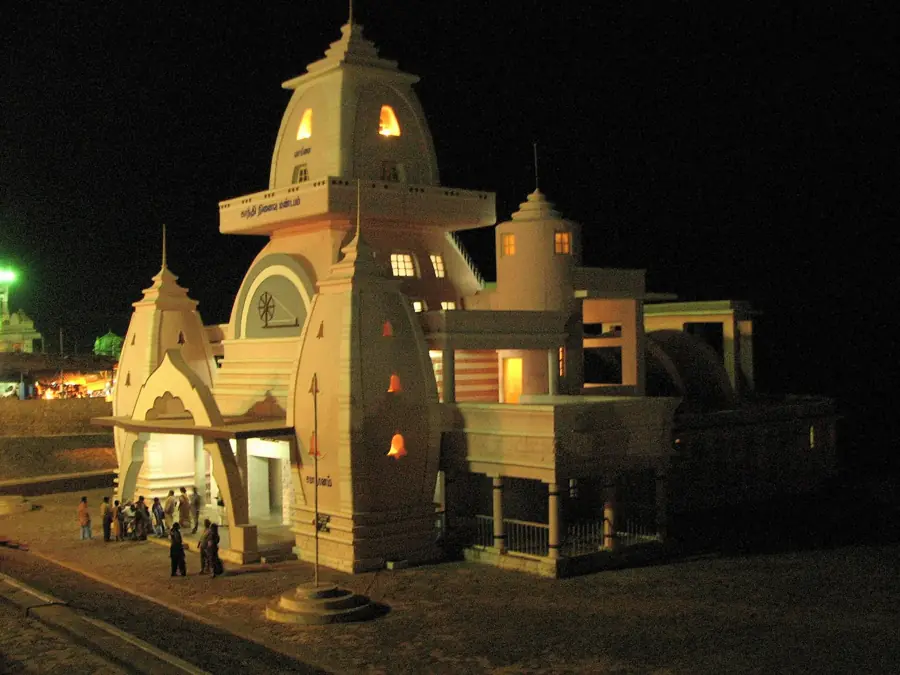 In town
Gandhi Mandapam
Built in 1956 in Odisha style, Gandhi Mandapam has a roof aperture that lets sunlight fall on the ash-keeping spot every 2 October, his birthday.
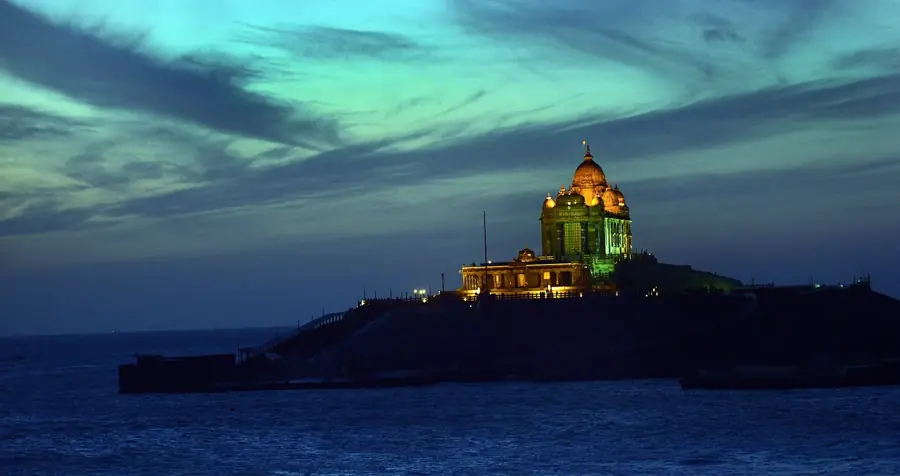 In town
Bhagavathy Amman Temple
Kumari Amman Temple opens 4:30 am–12:15 pm and 4–8:15 pm. Men remove upper garments, cameras stay outside, and the nose ring has a sea legend.
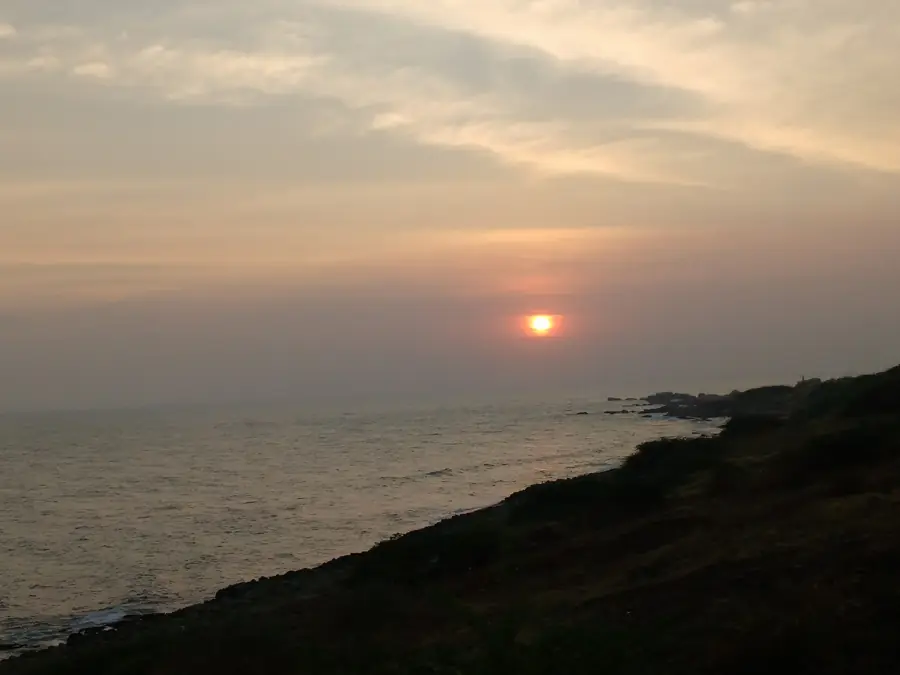 In town
Sunset Point
Kanyakumari is the only mainland point to watch sunrise and sunset over the sea from nearly one spot. Sunset Point is free — best 30 minutes before dusk.
Want Kamaraj Memorial at the right hour?
We know when the queue is short and when the light is good. One message and it is in your plan.