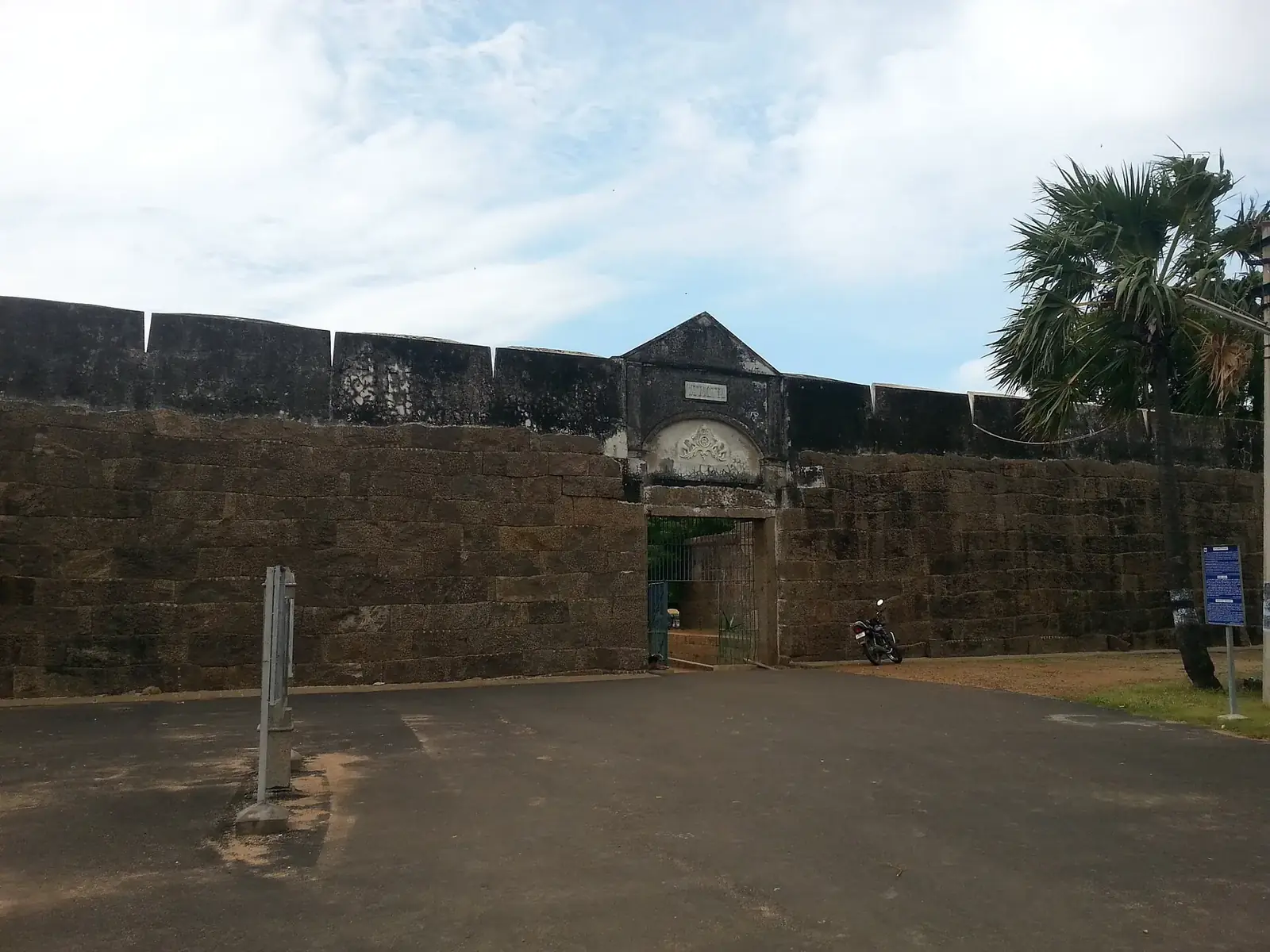
A Dutch commander’s granite fort on the Kanyakumari shore
Vattakottai — the name means round fort in Tamil, though the structure is closer to a rounded rectangle — was built in the eighteenth century as part of the coastal defences of the Travancore kingdom under Marthanda Varma, and much of the construction and design is credited to Eustachius De Lannoy, a Dutch naval commander captured in an earlier battle and taken into Travancore service rather than executed or ransomed. It sits directly on the shoreline seven kilometres from Kanyakumari town, a granite wall running along the rocks with the sea on one side and open ground on the other, and it is now protected by the Archaeological Survey of India.
What survives today is largely the outer rampart and the walls rather than any interior buildings, so this is a walk along and around a fortification rather than a room-by-room monument visit. The setting is the real draw: granite battlements meeting black rock and open sea, with almost none of the crowd that gathers at the town’s main sights. Entry is a small ASI fee, the site is open through the afternoon, and late in the day, when the light comes in low across the wall, is when the fort photographs and feels best. Most visitors combine it with a broader half-day loop around the near circuit rather than a dedicated trip.
De Lannoy, the Dutch commander who built it
Eustachius De Lannoy arrived in Indian waters with the Dutch East India Company and was defeated and captured at the Battle of Colachel in 1741 by the forces of Travancore’s King Marthanda Varma, one of the few clear victories by an Indian kingdom over a European colonial power in this period. Rather than being executed, De Lannoy was taken into Travancore’s service, rose to command its army, and is credited with modernising it along European lines, including work on fortifications such as this one. He is buried at Udayagiri Fort further north, and his career is one of the more unusual footnotes in the region’s colonial-era history: a captured European officer who ended up building the defences of the kingdom that defeated him. The fort itself reflects that European military engineering directly, in the shape of the ramparts and the placement of the walls relative to the shoreline, which is noticeably different from the temple-adjacent architecture found elsewhere in the district and is worth pointing out to anyone walking the walls without that context.
Walking the ramparts
The main experience here is walking along and up onto the granite wall itself, which runs for a good stretch parallel to the shore before turning inland to complete the enclosure. Sections of the rampart are wide enough to walk along at height, giving a view down onto the black rocks and the sea on one side and open scrubland on the other, and this elevated walk is the best part of the visit rather than anything at ground level. The stone is uneven in places and there is no continuous handrail, so footwear matters more here than at most stops in the district, and this is not an easy walk for anyone unsteady on their feet. Allow closer to an hour if you want to walk the full circuit rather than the forty-five minutes needed for a shorter loop near the entrance. There is shade in patches but not throughout, so a midday visit in April or May is considerably harder going than the same walk in the late afternoon.
Why late afternoon is genuinely the best time
The fort faces open sea to the west along part of its length, and the low light in the last two hours before sunset comes in almost level with the ramparts, picking out the texture of the granite in a way that flat midday light does not. It is also considerably cooler by then, which matters on a stone structure with limited shade. Morning visits are workable and quieter still, useful if you are combining this with a longer day elsewhere, but the photographs and the general feel of the place are noticeably better in the last two hours before closing. Weekday afternoons here are close to empty even in peak season, which is a real contrast with the crowds at Sunset Point and the town’s other main sights, and one of the reasons we suggest this fort specifically to visitors who say they want to get away from the crowd for an hour without giving up on seeing something worthwhile.
Getting there and what is nearby
The fort is about fifteen minutes by road from Kanyakumari town, a short, easy drive along the coast, and it fits naturally into a half-day loop that also takes in the drive out toward Suchindram or back through town for the evening sunset. There is a small car park near the entrance and the ASI ticket counter is at the gate; no advance booking exists or is needed. Public buses run the route but a private vehicle makes far better use of the limited time most visitors give this stop, since the fort itself is otherwise a short island in an afternoon that usually includes two or three other places. Our half-day and full-day circuits both route past here specifically because it breaks up a day of temples and viewpoints with something structurally different — sea, stone and open sky rather than a sanctum or a queue, and it works equally well slotted in on the way out to the hills or on the way back into town before dinner.
Honest expectations
This is not a restored palace with furnished rooms; it is a fortification wall, largely open to the elements, with little in the way of interpretive signage explaining what you are looking at beyond a basic ASI board at the entrance. Visitors expecting a Padmanabhapuram-scale monument will be underwhelmed; visitors who come for the setting — granite and sea rather than carved interiors — tend to rate it as one of the more atmospheric short stops in the district precisely because it is quiet and unpolished. Bring water, since there is little for sale at the site itself, and decent footwear, since the walk along the ramparts is uneven underfoot. Forty-five minutes to an hour is the right amount of time to give it; more than that only makes sense if you are specifically interested in the De Lannoy story or want to sit and watch the sea from the wall for a while.
Six things our drivers tell every guest
- Go in the last two hours before closing — the low light on the granite is far better than at midday.
- Wear proper footwear; the rampart walk is uneven with no continuous handrail.
- Carry water — little is sold at the site itself.
- Weekday afternoons here are close to empty even in peak season, a real contrast with the town sights.
- This is a wall and rampart, not a furnished palace — set expectations before you arrive.
- Combine it with a half-day loop toward Suchindram rather than a dedicated round trip.
How to get here
Vattakottai Fort is 7 km from Kanyakumari town, 15 min by road. It is included in our one-day sightseeing package and our 2 days 1 night package, or we can add it to any local sightseeing day by the hour.
Questions about Vattakottai Fort
Nearby places to add to the same day
 12 km
Thanumalayan Temple
Suchindram’s temple has four musical pillars carved from one stone and an 18 ft Hanuman cut from a single granite block, 12 km from Kanyakumari.
 In town
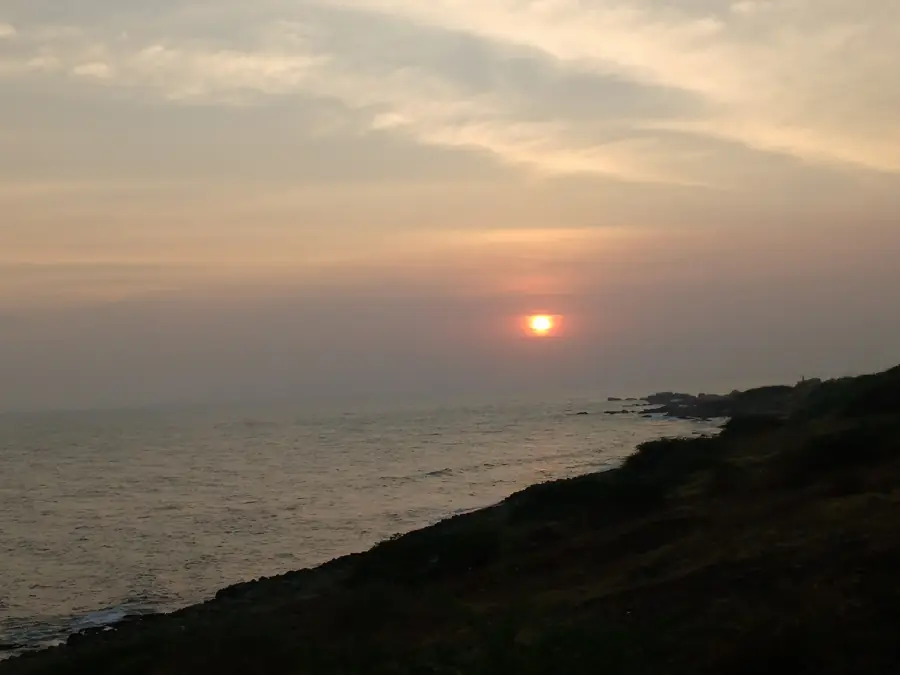
Sunset Point
Kanyakumari is the only mainland point to watch sunrise and sunset over the sea from nearly one spot. Sunset Point is free — best 30 minutes before dusk.
 32 km
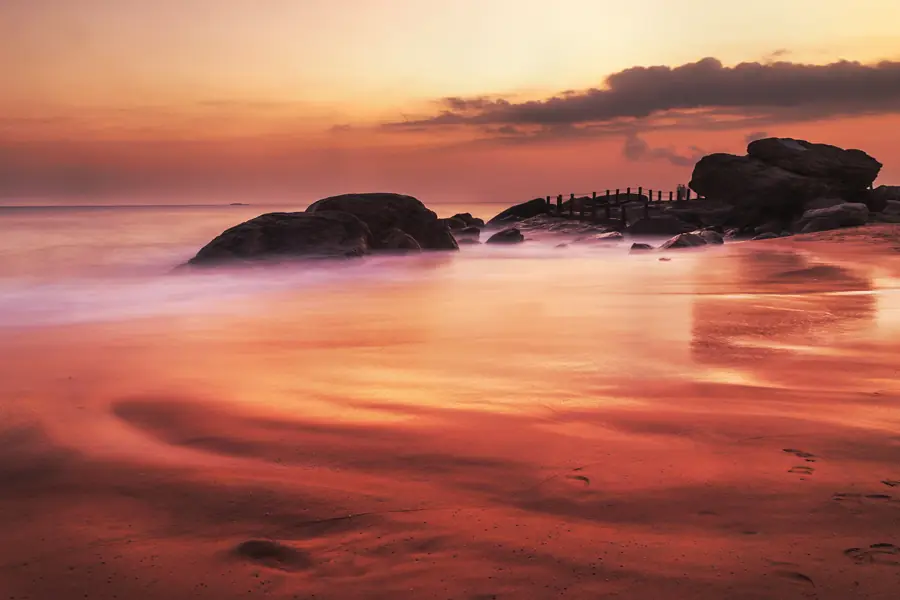
Muttom Beach
Muttom Beach is 32 km from Kanyakumari: black rock headland, a colonial lighthouse open 3 to 5 pm, and strong currents. Why nobody should swim here.
Want Vattakottai Fort at the right hour?
We know when the queue is short and when the light is good. One message and it is in your plan.