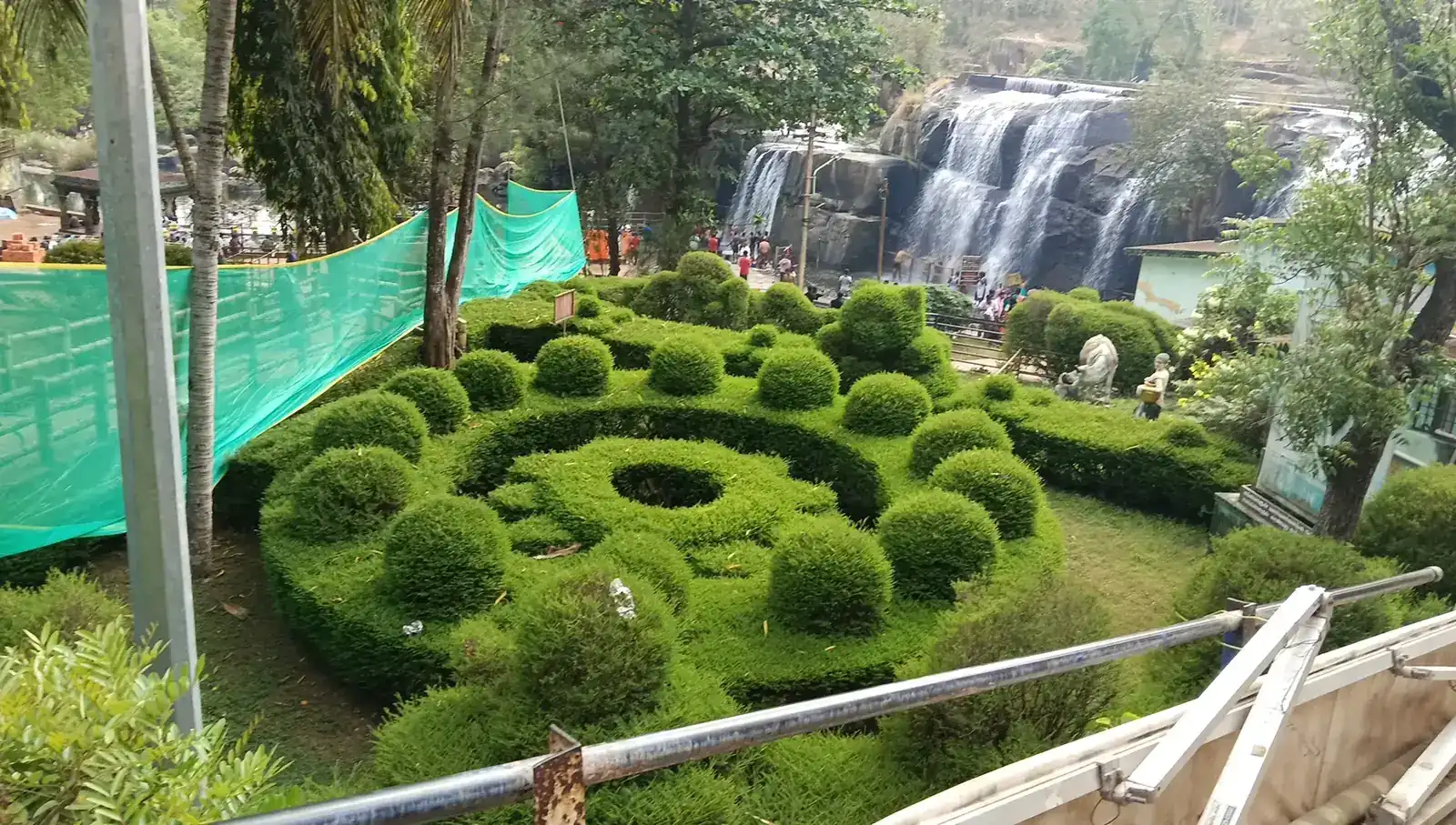
Thirparappu Falls: when the water is actually there
Thirparappu is not a natural waterfall in the way most visitors assume. The Kodayar river is dammed upstream at Pechiparai and Perunchani, and the water that drops over this wide rock ledge is water the irrigation department has chosen to release. That single fact decides whether your 55 km drive is worth it. From June, when the south-west monsoon fills the reservoirs, through to about January, the falls run as a broad white curtain roughly 50 feet high and 300 feet across. In March, April and May the shutters are often shut for the paddy cycle, and what you find is a black rock face with a trickle down one corner and a lot of disappointed families taking photographs of the temple instead.
Go in the right months and it is the best water in the district. The falls drop into a shallow, walled bathing pool with a sandy bottom that rarely goes past chest height, which is why local families come here rather than to any beach. The Thirparappu Mahadevar temple sits on the bank a hundred metres upstream, an old Shiva temple with a stone mandapam that looks straight down the river. Entry to the falls area is ₹10, the gate opens at 8 am, and the bathing section is cleared at 5:30 so the guards can see everyone out.
Which months the water actually runs
Ask at the counter before you pay, because the staff there know what the upstream gates did that morning. As a working rule: June and July bring the first reliable flow, August and September are dependable, October and November are the peak because the north-east monsoon tops the reservoirs up again, and December and January stay good. February is a gamble. March, April and May are usually poor, and in a bad year the ledge is bone dry — which is cruel timing, because that is exactly when school holidays send the most families this way.
There is a second consideration in the other direction. After two days of heavy rain the river runs brown and fast, the guards rope off the bathing pool completely, and you can look but not enter. That happens several times each October and November. If you are driving out specifically to swim, call ahead. We check with the Kulasekharam drivers most mornings in season and will tell you honestly if it is a wasted trip; there is no point taking a family 55 km to look at wet rock. In a dry month, Mathur Aqueduct and Padmanabhapuram Palace make a better day and are on the same road.
Bathing here: where it is safe and where it is not
The designed bathing area is below the falls, inside a low stone wall, with steps down and a sand and pebble floor. It is shallow — waist to chest on an adult through most of it — and there are guards on a whistle. That is where children should be. What you must not do is climb the rock shelf beside the curtain to stand under the water. The rock is slick with algae, there is a deeper channel on the far right where the flow concentrates, and the drownings that happen here almost always involve someone who went past the rope for a photograph.
Practicalities: bring your own towel and a change of clothes, because the changing rooms are basic and cost ₹10, and the queue for them at 4 pm on a Sunday is long. Wear something you can swim in under your clothes and save yourself the wait. Footwear with grip matters more than you would think; the approach stones stay wet all day. Leave phones and wallets with someone on the bank — there is no locker worth trusting. A small shop by the gate sells snacks and tea, and there are two or three simple meals hotels in Thirparappu village five minutes away where a full plate costs around ₹120.
The Mahadevar temple and the rest of the site
The Thirparappu Mahadevar temple sits right on the riverbank above the falls and is worth the twenty minutes. It is an old Shiva shrine with a mandapam whose pillars frame the river, and the priest will usually let you sit at the edge, where the noise of the water fills the whole space. It follows normal Tamil Nadu temple rules: shoes off at the compound, phones down inside the sanctum, and shorts are frowned on, though nobody will stop you at the outer mandapam. Mornings are quietest; by evening there is a small steady stream of local worshippers.
The rest of the site takes another half hour. There is a walkway along the top of the ledge with railings, which gives you the view straight down the drop and is the best photograph of the day if you go in the first hour after opening, before the spray haze builds. A children’s play area with swings and slides sits under the trees near the car park, along with a stretch of lawn where most families eat what they have carried. Monkeys work this area and will take an open bag of food within seconds, so keep things zipped. Toilets exist and are adequate rather than good; there is a ₹5 charge.
Getting there, parking and doing it without a car
From Kanyakumari the drive is 55 km and takes an hour and twenty minutes: out through Nagercoil, then the Kulasekharam road, then a signposted right at Thirparappu. The last eight kilometres run through rubber and plantain smallholdings on a narrow two-lane road with heavy two-wheeler traffic, so nobody should be trying to overtake there. Parking is ₹30 for a car and ₹100 for a bus, in a lot about 150 m from the gate that fills on Sunday afternoons; on a busy day cars park along the approach road and the walk is longer.
Without a car, take a bus from Nagercoil to Kulasekharam, which run every fifteen minutes and cost about ₹35, then a local bus or a share auto for the last six kilometres. Budget two hours each way and start early, because the last comfortable connection back to Nagercoil leaves Kulasekharam around 7 pm. Most of our guests fold Thirparappu into a western-district day that also takes in Pechiparai Dam, which is 12 km further on the same road and is the reservoir that feeds these falls — seeing the source and the outlet on one trip makes the irrigation story make sense.
Crowds, timing and whether it suits your group
Weekday mornings in season are close to empty and the sound of the falls is the only thing you hear. Sunday afternoon is the opposite: local families arrive from noon, the bathing pool is shoulder to shoulder by 3 pm, and the car park spills onto the road. The Tamil festival days and the second Saturday of each month are also heavy. If you want photographs without people in them, be at the gate at 8 am.
On suitability, be honest with yourself. This is a bathing and picnic spot, not a scenic viewpoint you admire from a railing and leave. Families with children between four and fourteen get the most out of it, and it is one of the few places in the district where they will genuinely enjoy themselves for two hours. Older travellers who do not want to get into the water may find forty minutes is enough, and the walk down to the pool involves uneven wet steps that are not easy with a stick. Couples looking for quiet should come on a weekday morning or skip it. Our family package schedules Thirparappu for a weekday and puts it before lunch, which avoids the worst of the crowd and gets wet clothes dry on the drive back.
Six things our drivers tell every guest
- Check the water before you drive. June to January it flows; March to May it is often a dry rock face.
- Wear swimwear under your clothes. The ₹10 changing rooms are basic and the 4 pm Sunday queue is long.
- Stay inside the walled bathing pool. The rock shelf beside the curtain is algae-covered and the right-hand channel is deep.
- Be at the gate at 8 am for clean photographs of the drop before the spray haze builds.
- Keep food bags zipped. The monkeys around the play area are quick and unafraid.
- Pair it with Pechiparai Dam, 12 km on, so you see both the reservoir and the falls it feeds.
How to get here
A broad 50 ft curtain on the Kodayar river, 55 km west. Strong June to January, often dry in summer. is 55 km from Kanyakumari town, 1 hr 20 min. It is included in our 2 days 1 night package and our family tour package, or we can add it to any local sightseeing day by the hour.
Questions about A broad 50 ft curtain on the Kodayar river, 55 km west. Strong June to January, often dry in summer.
Nearby places to add to the same day
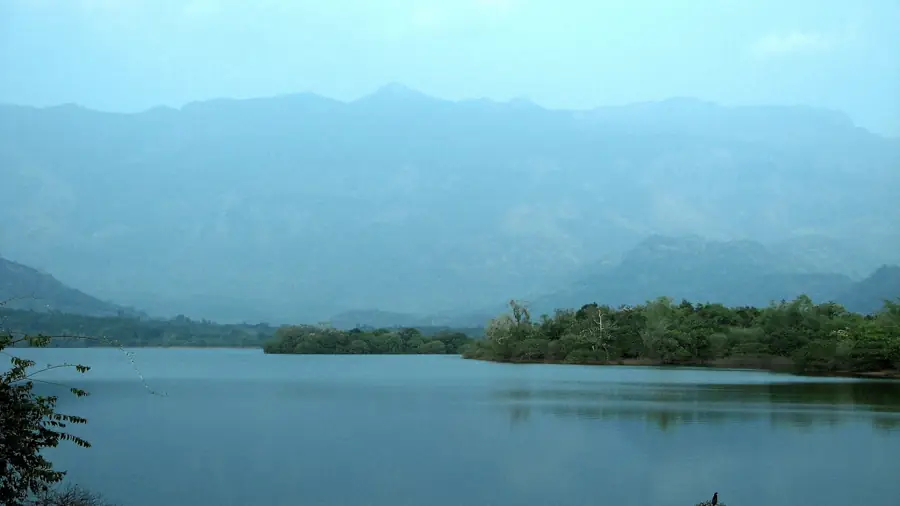 60 km
Pechiparai Dam
Pechiparai Dam is 60 km from Kanyakumari, built in 1906 on the Kodayar river. Garden ₹10, boating ₹100, open 9 am to 5.30 pm. When the reservoir is full.
 35 km
Asia’s largest wooden palace, 35 km up the Thuckalay road. Closed Mondays.
Padmanabhapuram Palace is 35 km from Kanyakumari, open 9 am to 4.30 pm, closed Mondays. Entry ₹35, camera ₹50. The Mantrasala and granite bed explained.
 60 km
Mathur Aqueduct
Mathur Aqueduct is 60 km from Kanyakumari, 115 ft high and about 1 km long. Entry ₹10, open 9 am to 6 pm. How to walk the trough and when it is empty.
Want A broad 50 ft curtain on the Kodayar river, 55 km west. Strong June to January, often dry in summer. at the right hour?
We know when the queue is short and when the light is good. One message and it is in your plan.