A memorial built to catch one day of sunlight a year
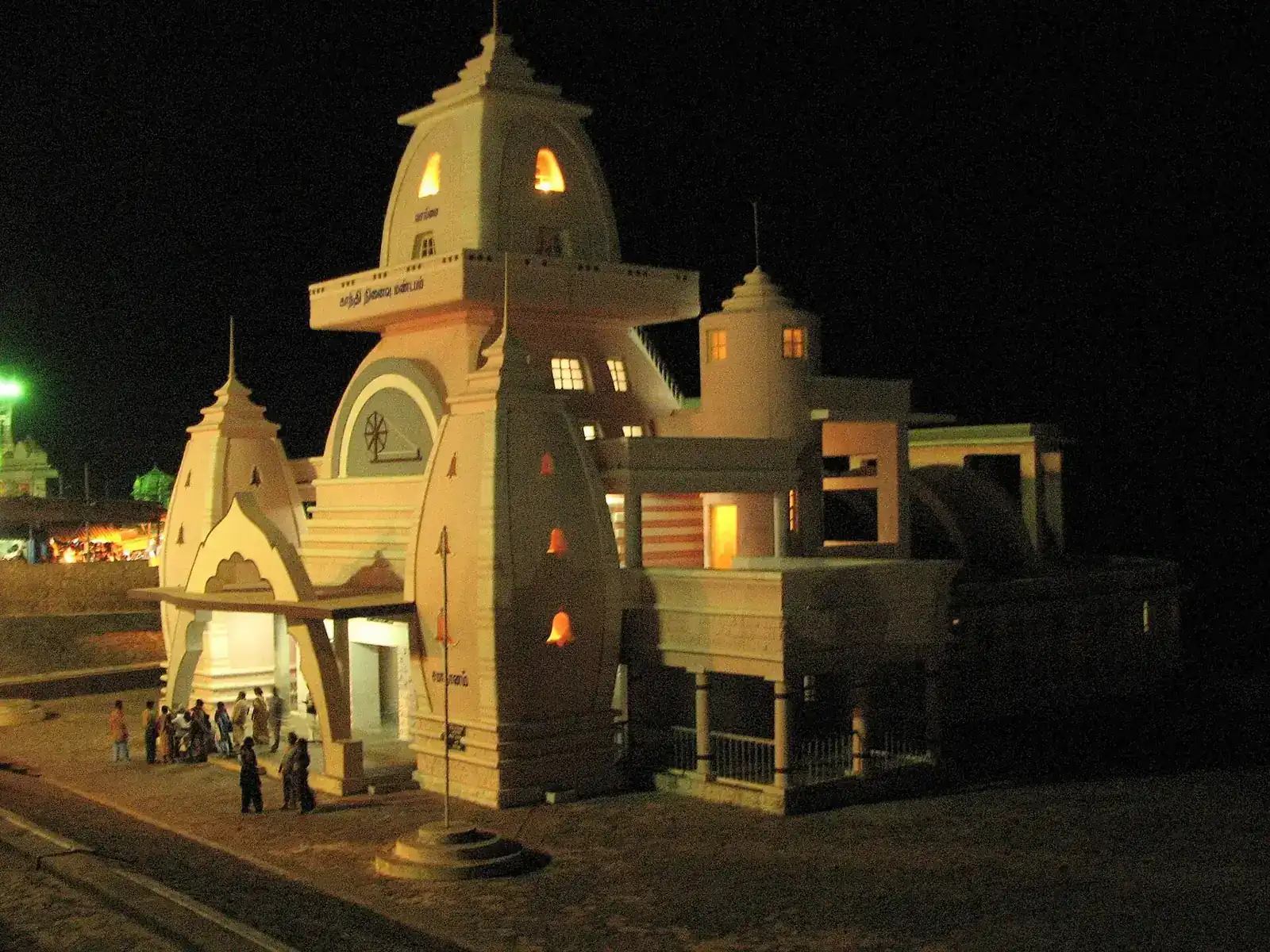
Gandhi Mandapam was built in 1956 on the spot where an urn holding a portion of Mahatma Gandhi’s ashes was kept for public viewing before immersion at the confluence of the three seas. The design is deliberately Odisha-style temple architecture rather than the usual colonial or Dravidian idiom seen elsewhere in the district, a choice made to keep the memorial visually distinct from any religious structure nearby. The single detail every guide mentions is the roof: there is a small aperture cut directly above the exact spot where the ashes rested, positioned so that at noon on 2 October, Gandhi’s birthday, sunlight falls precisely on that spot and nowhere else in the hall.
Beyond that one architectural fact, this is a short, quiet, free stop rather than a destination that needs an hour. Most visitors walk in, read the boards, look up at the roof, and walk out again inside fifteen minutes. It sits on the shore road a short walk from the Amman temple and the ferry jetty, which is exactly why it works well as a five-minute add-on to a longer morning rather than a trip planned around it on its own. There is no entry fee and no fixed guide, though caretakers on site will usually explain the roof detail if asked.
The roof aperture, and why it matters
The single feature that makes this memorial more than a plain hall is a narrow opening cut into the dome directly above the platform where Gandhi’s ashes were once kept in an urn for public darshan. On 2 October each year, his birthday, the sun at noon lines up with the aperture and casts a beam of light onto that exact spot and nowhere else in the building. It is a piece of architectural precision rather than a natural coincidence, worked out and built into the design in 1956, and it is the one fact that turns a fairly plain hall into something worth explaining to anyone travelling with you. Outside of 2 October, the aperture still lets in a shaft of daylight at midday, though it falls slightly off the marked spot on other dates, which is itself a small demonstration of how deliberately the alignment was calculated for that one day. Caretakers on site point this out if you ask, though there is no signage inside explaining it in detail, so it helps to know the story before you arrive rather than hope to piece it together from the building alone.
Why Odisha-style architecture, here
Most of what stands near this stretch of coast is either colonial-era construction, a modern reinforced memorial like the rock structures offshore, or Dravidian temple architecture typical of Tamil Nadu. Gandhi Mandapam deliberately breaks that pattern, built in the style of Odisha’s temple architecture rather than anything local, a choice made so the memorial would not read as a religious shrine of the kind found throughout the district. The result is a squat, domed hall with detailing that looks distinctly out of place next to the gopurams and colonial buildings nearby, and that contrast is itself worth noticing rather than walking past. It is a national memorial in intent, secular in function, and the architectural choice underlines that separation clearly. Few visitors clock the style difference on a first pass, assuming it is simply another temple building on a shore road full of them, and pointing it out is one of the small things that turns a two-minute walk-through into an actual stop worth the ten minutes it takes.
What there is to see inside
The interior is a single hall rather than a set of rooms, centred on the marked platform under the roof aperture, with photographs and a short account of Gandhi’s connection to Kanyakumari displayed along the walls. There is no museum-scale collection here and nothing to compare with a dedicated Gandhi museum elsewhere in the country; treat it as a memorial rather than an exhibition. Shoes come off at the entrance as a mark of respect rather than a religious requirement, and the floor is shaded, which makes it one of the more comfortable stone floors in town at midday. Photography is generally permitted, unlike at the Amman temple a short walk away, though a quiet, respectful pace is expected rather than a stream of posed shots. Most visitors are in and out within ten minutes; anyone with an interest in the freedom movement or in the story of Gandhi’s ashes being distributed to sacred rivers and coastal points across India will want closer to twenty.
Combining it with the shore walk
This is very much a stop on the way to somewhere else rather than a planned destination, and it works best as part of the same shore-road walk that takes in the Bhagavathy Amman Temple, the ferry jetty and the Kamaraj Memorial next door. All four sit within a few hundred metres of each other on flat, walkable ground, and a single loop covers them comfortably in under an hour without needing the car at any point. Our one-day itinerary treats this stretch as one continuous block between the morning ferry and the afternoon drive out to the hills, rather than as separate scheduled stops, because trying to time each one individually wastes more time than it saves. If you are short on time and have to choose, the ferry and the Amman temple come first; Gandhi Mandapam is the stop to add if you have a spare ten minutes rather than the one to build a morning around.
Honest expectations
This is not a stop that rewards a long visit, and saying so plainly is more useful than pretending otherwise. There is one hall, one architectural detail worth knowing in advance, and a short wall of photographs; visitors expecting something on the scale of a national museum are usually disappointed within five minutes. Where it does work is as a quiet, free, shaded pause between busier and hotter stops nearby, and as a five-minute lesson in a piece of design most people would otherwise walk straight past. Families with young children tend to move through quickly; anyone with a specific interest in Gandhi’s life or in Indian independence history gets more out of the ten minutes than a casual visitor will. It is entirely skippable if your day is genuinely tight, but it costs nothing, adds almost no time to a shore-road walk you are making anyway, and is one of the few places in town where the crowd thins out almost completely by mid-morning.
Six things our drivers tell every guest
- Time a visit for noon on 2 October if the roof-light alignment interests you — any other day it is off the marked spot.
- Shoes come off at the entrance, though the shaded floor is cooler than most stone floors in town.
- Photography is generally allowed here, unlike at the Amman temple a short walk away.
- Treat it as a ten-minute add-on to the shore walk, not a stop to plan a morning around.
- It sits right beside the Kamaraj Memorial — see both in the same short stop.
- There is no museum-scale collection inside; expect one hall and a wall of photographs.
How to get here
Gandhi Mandapam is in town, 8 min walk from the bus stand. It is included in our one-day sightseeing package and our 2 days 1 night package, or we can add it to any local sightseeing day by the hour.
Questions about Gandhi Mandapam
Nearby places to add to the same day
 In town
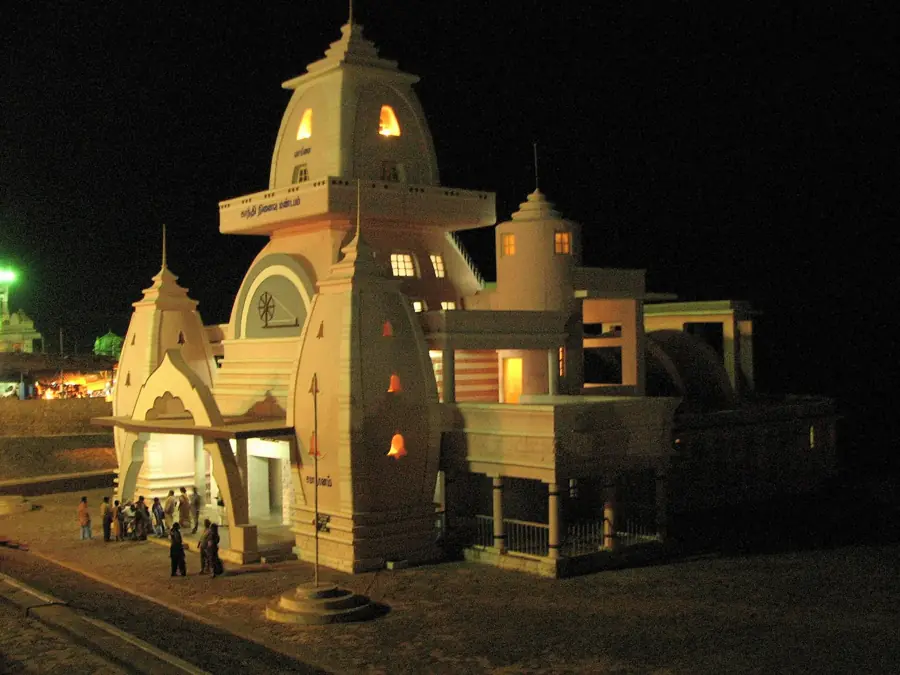
Kamaraj Memorial
Kamarajar Mani Mandapam holds the ashes of K. Kamaraj, Tamil Nadu’s former chief minister, in a free ten-minute stop right beside Gandhi Mandapam.
 In town
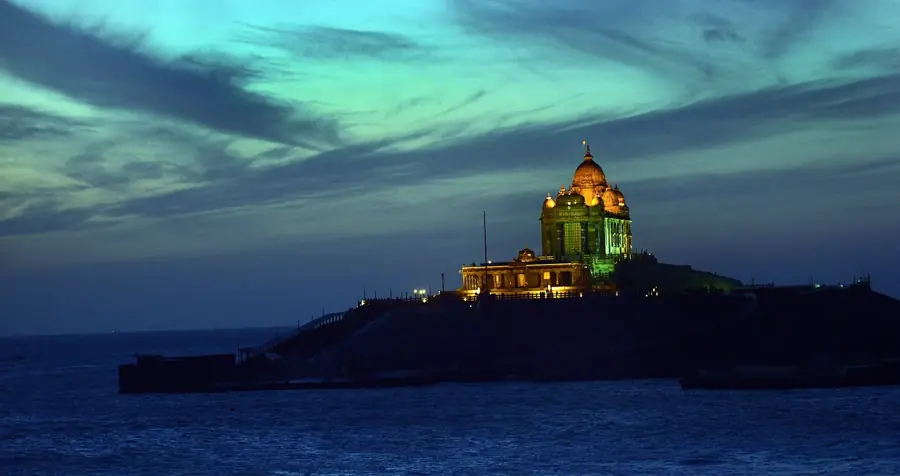
Bhagavathy Amman Temple
Kumari Amman Temple opens 4:30 am–12:15 pm and 4–8:15 pm. Men remove upper garments, cameras stay outside, and the nose ring has a sea legend.
 In town
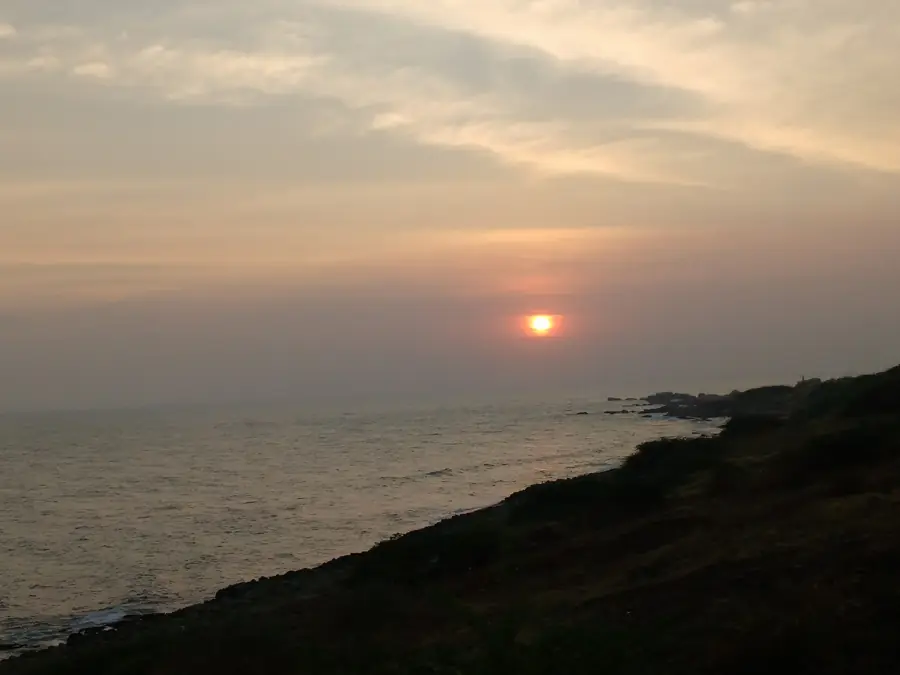
Sunset Point
Kanyakumari is the only mainland point to watch sunrise and sunset over the sea from nearly one spot. Sunset Point is free — best 30 minutes before dusk.
Want Gandhi Mandapam at the right hour?
We know when the queue is short and when the light is good. One message and it is in your plan.