Visit Kanyakumari from June to September if greenery, low prices and empty sites matter more to you than a guaranteed clear sunrise. Hotel rates fall 35 to 45 percent against the December peak, the ferry queue disappears entirely on an ordinary weekday, and the waterfalls and reservoirs in the western hills, dry or thin for much of the year, run at their fullest. The trade-offs are real too: sunrise is visible on perhaps three mornings in ten, the ferry is occasionally suspended for rough seas, and the Kodayar hill road can have leeches after heavy rain.
This is the south-west monsoon, running roughly June to September, one of two monsoons that reach this district; the north-east monsoon, October to December, is wetter overall but falls mostly in the evening and barely touches the morning sightseeing plan. The south-west monsoon is different in character: longer, greyer spells of rain and cloud that can sit through a whole morning, which is why it is genuinely the wrong season if a clear sunrise photograph is the one thing you have come for.
This guide sets out exactly what improves and what gets harder in these four months, so you can decide with real information rather than a blanket warning to avoid the rains.
What actually improves in the monsoon
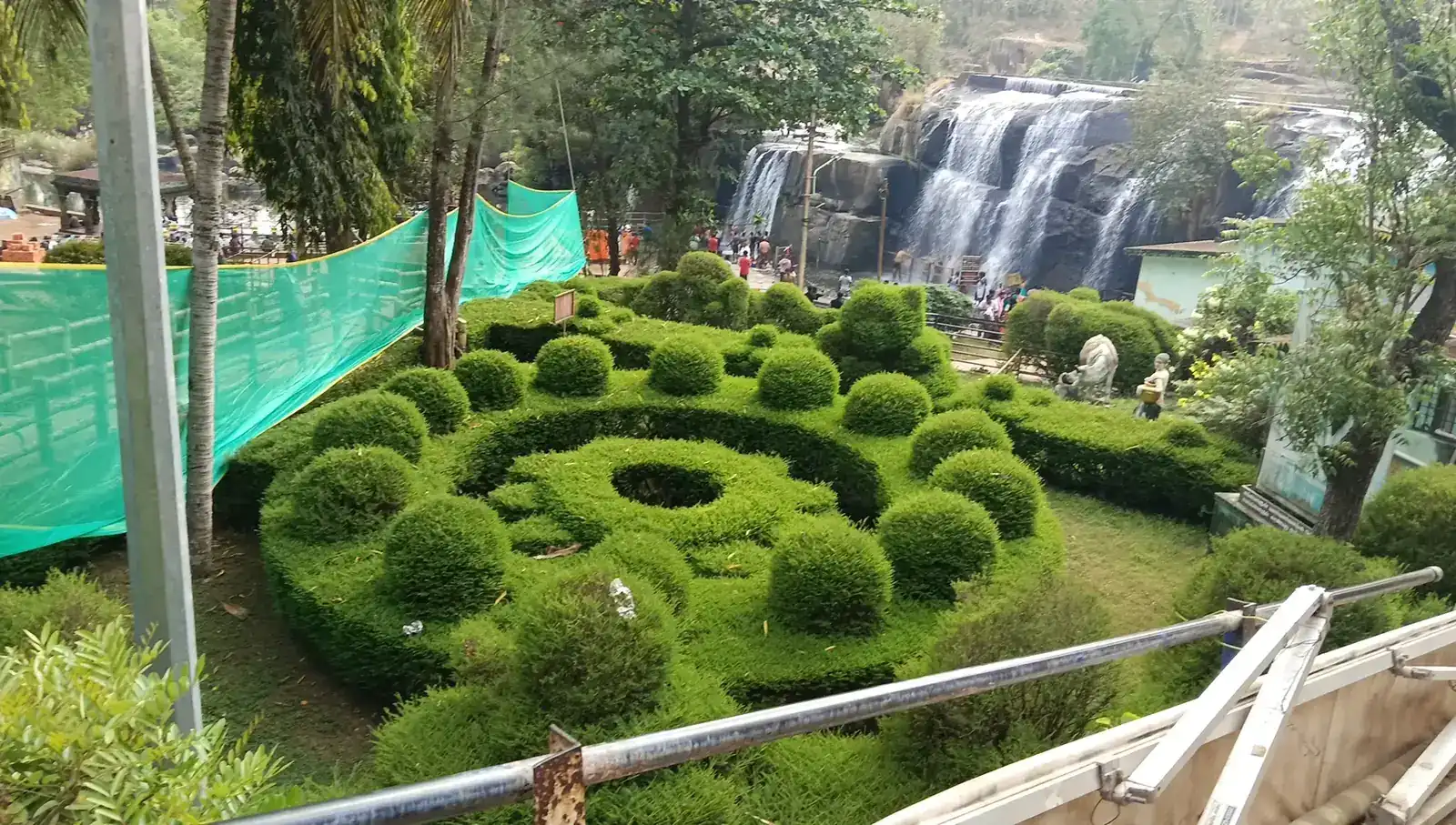
Thirparappu Falls runs at its fullest from June through to around January, and June to September is when the flow is at its most dramatic, wide and forceful rather than the reduced trickle of March to May. The Pechiparai and Chittar reservoirs fill close to capacity, and the Mathur aqueduct, dry or a thin stream for much of the year, carries a genuine flow of water across its 1 km trough. The paddy fields around Nagercoil turn bright green, and the wind farm at Muppandal turns hardest in these months, since the monsoon wind is the strongest of the year.
Hotel rates drop 35 to 45 percent against the December peak; a room that costs ₹4,000 in January runs ₹2,300 to ₹2,600 in July. The ferry queue effectively disappears on weekdays, and even weekends are noticeably thinner than any month from October to May; you can often walk onto a boat within minutes and sit in the meditation hall as long as you like without anyone waiting behind you.
Restaurants and tea shops are quieter too, meaning faster service and fresher stock turnover at the smaller places, though a handful of smaller hotels use the low season for maintenance and close for short stretches, worth checking before booking.
What gets harder: sunrise, sea and roads
Sunrise is the clearest casualty. A band of low cloud sitting on the horizon, common from May through September, hides the sun until it has already climbed well above the water, by which point the light is flat rather than coloured. Our own count over recent seasons puts clear-sunrise odds at roughly three mornings in ten during this stretch, against seven or eight in ten for January and February.
The sea itself turns rougher and browner near the shore, less pleasant for a beach walk and occasionally unsafe enough that the ferry is suspended for the day, a decision made each morning by the harbour authorities with no advance online notice. This happens on a meaningful number of days in June and July specifically, easing through August and September.
Hill roads west of Nagercoil, particularly the approach to Thirparappu and the Kodayar valley, get slicker and can carry small landslips or fallen branches after a heavy spell; drive more cautiously and expect slightly longer travel times than the dry-season estimates in our distances guide. None of this makes the district unsafe to visit, but it does mean building slack into any tightly timed plan.
The ferry in monsoon: what to actually expect
The ferry to Vivekananda Rock runs on the same 8 am to 4 pm schedule year-round, but from June to September it is suspended on days when the harbour authorities judge the swell unsafe, sometimes for two or three days running during an active spell of the monsoon. There is no advance public schedule for this; the call is made each morning and posted at the counter, not published online, so if you have travelled specifically to see the rock, ask your hotel or driver the evening before, since local operators usually have a sense of whether the sea has been unsettled.
On the days it does run, the crossing itself is calm enough and the queue is close to non-existent; this is genuinely the easiest time of year to spend as long as you like on the rock without anyone waiting behind you at the meditation hall or the Sripada Mandapam.
Our practical advice for a monsoon-season trip: build in a spare day if the ferry crossing is important to you, rather than a single tightly scheduled visit, and have a backup plan, the temple, the Gandhi Mandapam and the shore itself remain open regardless of sea conditions, so a cancelled sailing does not mean a wasted day, just a rearranged one. Full ticket and queue detail is in our ferry and tickets guide.
Leeches, slippery paths and the Kodayar road
The Kodayar road, running up into the hills toward the Mathur aqueduct and the reservoir catchment, is genuinely leech territory after sustained monsoon rain, a fact local guides mention and general tourist material almost never does. Anyone walking off the main path near the aqueduct or around the reservoir edge in wet conditions should tuck trousers into socks or wear closed shoes rather than sandals, and check ankles after any walk through wet grass.
This is a minor irritation, not a hazard; leeches here cause a small bleed rather than any real harm, and salt or a lit match removes one quickly if it attaches. It is worth knowing about in advance simply so it does not come as an unpleasant surprise, since it catches out visitors who assume Western Ghats-style leech warnings only apply much further north in Kerala’s hill stations.
Paths at Thirparappu Falls itself get slippery on the wet rock near the bathing area, more so than in drier months, and the currents in the pool below the main fall run stronger in a heavy monsoon; supervise children closely here specifically in July and August, when the flow is at its most powerful, rather than treating it as the same gentle pool it becomes by February.
The two monsoons compared: south-west versus north-east
| South-west (Jun–Sep) | North-east (Oct–Dec) | |
|---|---|---|
| Rain pattern | Longer, greyer spells, can sit through morning | Builds through afternoon, falls 3–9 pm |
| Sunrise odds | 3 in 10 | 6 in 10 |
| Ferry suspensions | Meaningful number of days, mainly Jun–Jul | Rare |
| Sea state | Rough, brown near shore | Calmer, clearing by December |
| Hill waterfalls | Full flow | Still strong, easing by December |
| Hotel rates | Lowest of the year | Rising toward December peak |
| Crowd | Lowest of the year | Building toward Christmas |
The practical takeaway is that October and November, despite being the wettest months by total rainfall, are a noticeably easier visit than June to September, because the rain falls later in the day and the sea has largely settled. If you want the monsoon’s greenery and low prices with better sunrise odds, aim for late September or October rather than the core June-to-August window. Either monsoon rewards a flexible itinerary over a fixed one: the same three days that would run like clockwork in January need a spare few hours built in during any wet-season month, whichever direction the rain is coming from. Travellers coming from north India sometimes assume a single Indian monsoon season covers the whole country; on this particular headland it is worth remembering there are genuinely two, arriving from opposite directions, and they behave differently enough to change which week you would pick.
What to pack for a monsoon trip
A proper umbrella handles the district’s rain far better than a raincoat, since showers here are often heavy but short rather than the steady drizzle a raincoat is built for; a compact umbrella that survives being folded wet repeatedly is worth more than a fashionable one. Closed shoes or sandals with a good grip matter more than usual, both for the wet stone paths at the rock and the temple and for the leech-prone stretches on the Kodayar road.
Pack a dry bag or at minimum a sealed plastic bag for phones and cameras; the ferry crossing in a choppy monsoon sea brings spray over the side more often than in calmer months, and a sudden shower can catch you at the sunset point with no warning. A light waterproof layer for children matters more than for adults, since a soaked child cools down and tires faster than a soaked adult realises.
Quick-dry clothing is worth prioritising over cotton, which stays damp for hours in the humidity between showers. Carry a spare set of clothes in the car if you are doing a full day out, since a monsoon downpour can end a day’s sightseeing in the clothes you are wearing rather sooner than in drier months, and our drivers always keep a change of plan ready for exactly this.
Who should choose the monsoon, and who should not
Choose the monsoon if: you have visited Kanyakumari before and want to see the hills, the falls and the reservoirs at their best; your priority is value and you are comfortable with a cloudy sunrise; you want the ferry and the rock without any queue; or you are combining the trip with monsoon-season Kerala backwaters, which are at their own best in this window.
Avoid the monsoon if: the sunrise photograph is the one thing you have travelled for, in which case October to March, and January specifically, gives far better odds; your schedule is rigid and cannot absorb a ferry cancellation; or you are prone to seasickness, since the crossing, while safe, is choppier than in calmer months.
For most first-time visitors, we would still recommend October to March as the safer choice, simply because it is a first visit and the sunrise matters more when you have not seen it before. For a second or third trip, or for anyone genuinely drawn to green hills and empty sites over a guaranteed dawn, June to September is an honest and often better-value choice, not a compromise season, and it is the one we would pick ourselves for a quiet long weekend.
Written by the Kanyakumari Tours & Travels team in Kanyakumari and re-checked on the ground every month. Spotted something that has changed? Tell us on WhatsApp and we will fix it.