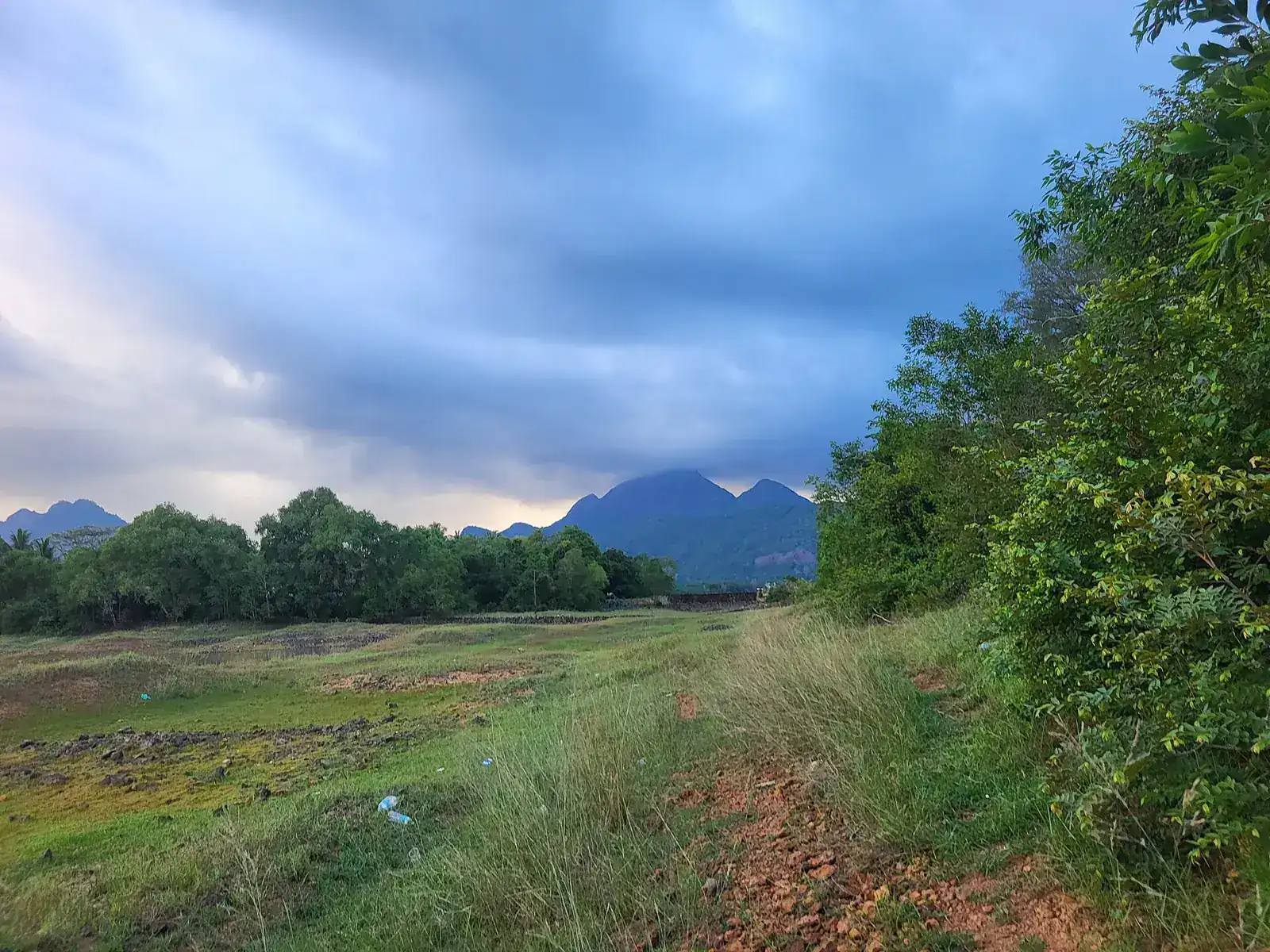
Chittar Dam: the quieter reservoir on the Mathur road
Chittar is two dams, not one, and the first thing to know is which one you want. Chittar I and Chittar II sit a few kilometres apart on two streams that drain the low hills north of Thiruvattar, built in the 1980s as a pair with an interlinking canal, and both hold back modest reservoirs backed by scrub and rubber rather than the tall forest you see at Pechiparai. Chittar I is the one with the garden, the boating jetty and the parking; Chittar II is a bund, a view and very little else. When people say they are going to Chittar Dam they almost always mean the first.
It is 55 km from Kanyakumari, about 10 km off the Thiruvattar road, and the reason to come is that it is the least visited of the western reservoirs. On a weekday afternoon you may have the garden and the water to yourselves. Entry is ₹10, pedal boats are ₹100 a head, and the site keeps government-garden hours of 9 am to 5:30 pm. It fits neatly between Mathur Aqueduct and Padmanabhapuram Palace, and it is the fallback we use when Pechiparai boating is shut. Expect a pleasant hour, not more.
Chittar I versus Chittar II: pick the right bund
Chittar I is the visitor site. Below its earth bund is a laid-out garden with lawns, painted concrete figures, a small children’s play area, toilets, a tea stall that opens in season, and a jetty with pedal boats. A path climbs onto the bund and you can walk most of its length, looking over water on one side and the garden and a patchwork of paddy and rubber on the other. The reservoir is small enough to see across, and the far shore is low hills with a few houses, which gives it a settled, farmed feel rather than a wild one.
Chittar II is about 4 km further up a narrow road. There is no garden, no counter, and no boating, just the bund, a PWD quarters and the water. It is the better view of the two if you want the hills, and the best place to be at 5 pm when the light drops across the reservoir, but there is nothing to do except look. Local couples on two-wheelers know it; tour cars rarely bother. If you have the time and your driver knows the turning, do both: fifteen minutes at Chittar II for the view, then back to Chittar I for the garden and a boat. If you have only an hour, stay at Chittar I. Both are signposted from the Thiruvattar to Kaliyal road, though the boards are small and faded and the turnings are easy to miss after dark.
Boating, the garden and what to expect from each
The boats at Chittar I are pedal boats for two or four, ₹100 a head for about twenty minutes, plus the odd rowing boat when a boatman is on duty. Life jackets are provided and the water close to the jetty is shallow, so it is a gentler introduction than the deeper reservoir at Pechiparai and suits younger children. The service runs from 10 am to 4:30 pm and is more reliable than Pechiparai’s because the reservoir level here does not swing as violently; boats were running in April in the last two years when Pechiparai had stopped. It still stops in rain, and on a weekday out of season you may need to wait while the boatman is fetched from the village.
The garden is standard issue, kept reasonably, with enough shade for a picnic under the trees near the bund. There is a pump-fed fountain that runs at weekends, swings, a slide and a couple of concrete benches with a view. Bring your own food; the tea stall sells only tea, biscuits and bottled water, and only in season. Toilets are next to the parking and are fair. The one real irritation is the monkeys, which are fewer than at Kalikesam but confident enough to take an open packet from a bench, so keep food in a closed bag until you sit down to eat.
Seasons, water levels and light
Chittar fills with the south-west monsoon from June and again with the north-east rains in October and November, so October to February is when the reservoir laps the bund and the surrounding fields are green. Because these are small catchments the level rises and falls faster than at Pechiparai: a wet week in November brings it up visibly, and a dry March pulls it back to expose a band of reddish bank. In April and May the reservoir is noticeably smaller but rarely empty, which is why the boats keep running here when they have stopped elsewhere.
Light matters more than at most sites, because the whole point is a sheet of water with hills behind it. Mornings before 10 are calm and the reflections are best; the afternoon breeze from about 1 pm ripples the surface and flattens the view. Late afternoon after 4 pm is good again and the bund at Chittar II looks west into the sun going down behind the ridge. Weekends draw local families from Marthandam and Kuzhithurai from about 3 pm, so a Saturday or Sunday afternoon is busy by local standards, which still means a few hundred people rather than the crush you find at Thirparappu. Weekday mornings in any month are nearly empty. Heavy rain closes the bund path for safety, and the boats stop the moment it starts.
Getting there and where it fits in a day
From Kanyakumari, drive to Nagercoil and then take the Thuckalay and Thiruvattar road. About 6 km past Thiruvattar, a signposted left leads through rubber estates and a couple of villages to Chittar I; the last stretch is narrow and slow and takes twenty minutes for the 10 km. Total distance is around 55 km and the drive is an hour and twenty minutes. Parking at Chittar I is a shaded lot beside the garden gate, ₹30 for a car, and it never fills. There is no direct bus from Nagercoil; you would take a Thiruvattar or Kaliyal bus and then an auto for the last stretch, which makes it awkward without a car.
It fits best as a late-morning or early-afternoon stop between the palace and Mathur, or as a swap for Pechiparai when the boating there is shut. A workable day is the palace at 9, Chittar I from 11 to 12, lunch in Thiruvattar for about ₹130 a head, Thirparappu after lunch if the water is running, and Mathur from 3:30. That is about 150 km of driving, ₹2,800 in a sedan or ₹4,200 in an Innova Crysta with fuel, tolls, parking and the driver included. Travellers going on to Kerala can visit Chittar and rejoin the highway at Marthandam without doubling back, which is how our Kerala and Kanyakumari route handles it.
Who should bother, and who should not
Chittar is for people who have already done the coast and want an easy hour beside water with nobody around. Older travellers like it because there are no steps to speak of, the bund path is level, and there is shade and a bench. Families with small children get a gentle boat ride and a lawn. Photographers who arrive before 10 am get clean reflections and empty frames. Birdwatchers will find herons, kingfishers and, in winter, a few duck on the far side.
It is not for anyone expecting a spectacle. The dams are low earth bunds, the reservoirs are modest, and the garden is the same government garden you will see at three other sites in the district. If you are on a single-day tour from Kanyakumari, it does not make the cut; the day is already full with the palace, Thirparappu and Mathur. If you are staying two or three nights and your second day is the western hills, or you are on the road to Kerala anyway, it is a pleasant, cheap hour that costs nothing in effort. Do not choose it over Pechiparai when both are running normally, because the hills there are taller and the water wider. Choose it when Pechiparai is shut, when you want quiet above all else, or when you are already passing the turning.
Six things our drivers tell every guest
- Go to Chittar I for the garden and boating. Chittar II, 4 km on, is only a bund and a view, though the view is better.
- Arrive before 10 am for still water and clean reflections. The afternoon breeze ripples the reservoir from about 1 pm.
- Boating here often runs in April and May when Pechiparai has stopped, because the level swings less.
- Carry your own food and water. The tea stall opens only in season and sells nothing substantial.
- Keep food bags closed until you sit down. Monkeys work the benches near the bund.
- Use it as a swap for Pechiparai on a western-circuit day, not as a reason for a separate trip.
How to get here
Chittar Dam is 55 km from Kanyakumari town, 1 hr 20 min. It is included in our 3 days 2 nights package and our kerala + kanyakumari package, or we can add it to any local sightseeing day by the hour.
Questions about Chittar Dam
Nearby places to add to the same day
 60 km
60 kmMathur Aqueduct
Mathur Aqueduct is 60 km from Kanyakumari, 115 ft high and about 1 km long. Entry ₹10, open 9 am to 6 pm. How to walk the trough and when it is empty.
 35 km
35 kmAsia’s largest wooden palace, 35 km up the Thuckalay road. Closed Mondays.
Padmanabhapuram Palace is 35 km from Kanyakumari, open 9 am to 4.30 pm, closed Mondays. Entry ₹35, camera ₹50. The Mantrasala and granite bed explained.
 60 km
60 kmPechiparai Dam
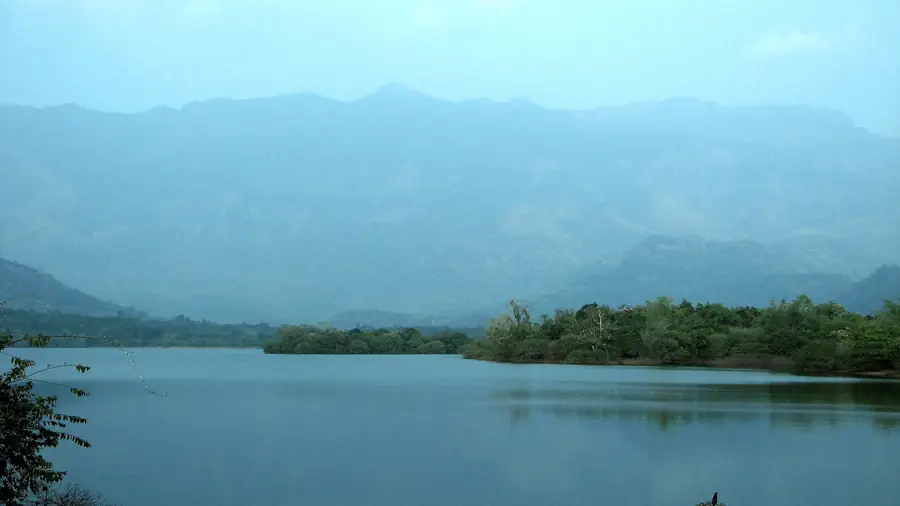
Pechiparai Dam is 60 km from Kanyakumari, built in 1906 on the Kodayar river. Garden ₹10, boating ₹100, open 9 am to 5.30 pm. When the reservoir is full.
Want Chittar Dam at the right hour?
We know when the queue is short and when the light is good. One message and it is in your plan.