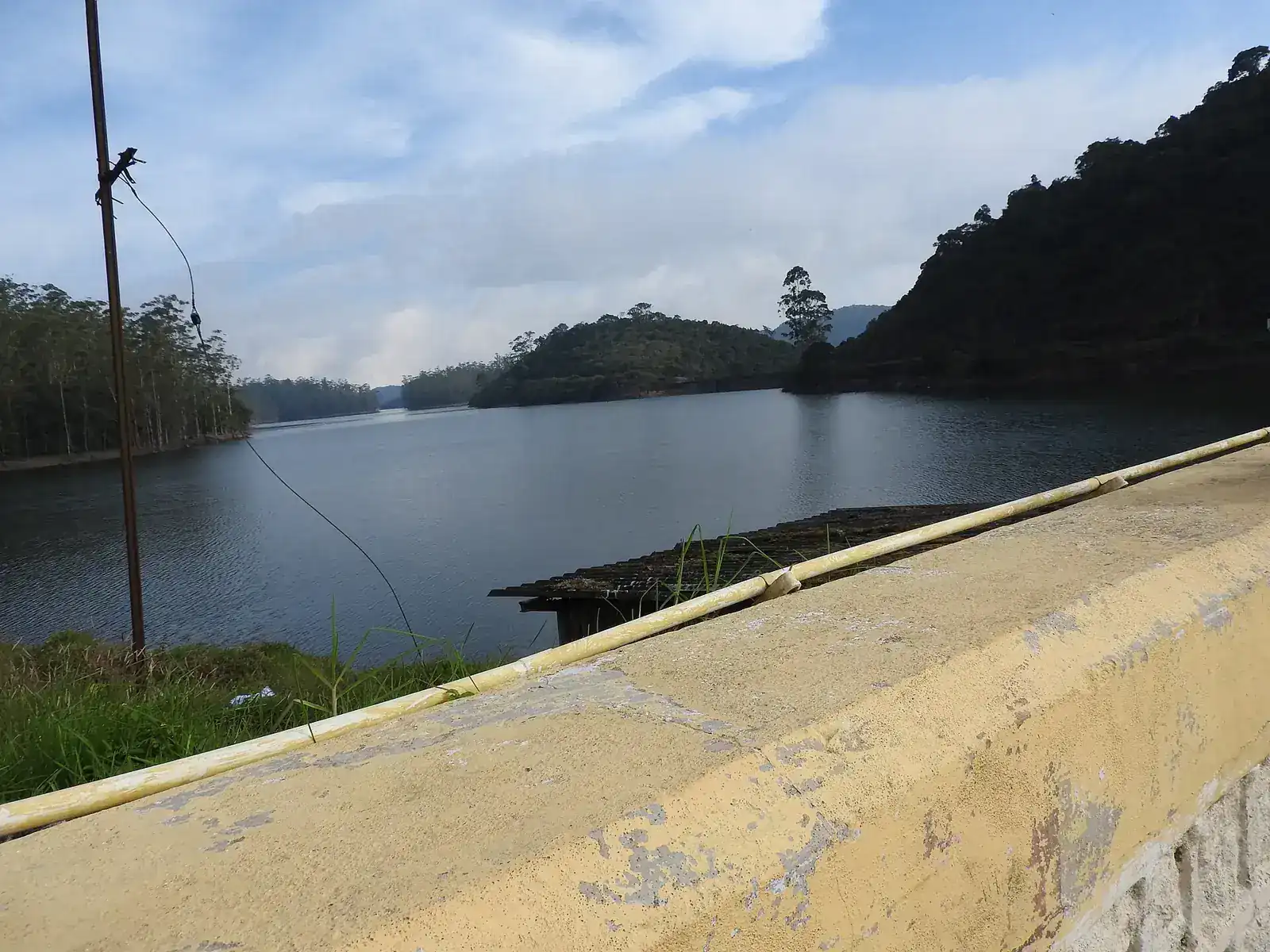
Kodayar: the twin falls up the ghat road behind Pechiparai
Kodayar is the one place in this district where you drive up into the Western Ghats rather than looking at them from the plain. The road leaves Pechiparai, passes the forest checkpost, and climbs for about 15 km through reserve forest and then the Upper Kodayar tea estate, gaining roughly 900 metres. The falls are a pair of cascades on the Kodayar river a little below the upper dam, dropping side by side through forest into a rocky pool, and they are seen from a roadside viewpoint and a short scramble down rather than from a laid-out park. There is no ticket counter, no changing room and no tea stall.
That is also why the rules matter more here than anywhere else on this site. The checkpost passes private vehicles only between 7 am and about 3 pm, everyone must be back below the barrier by 6 pm, and after heavy rain the ghat road is simply closed, sometimes for days, while landslips are cleared. A separate permit is needed to go past the falls into the tea estate and the upper dam, and it is not always given. It is 65 km and two hours from Kanyakumari, and it is a half-day commitment. Between July and December, when the river runs full and the mist sits on the estate, it is the best drive in the district. In April the falls are thin and the forest is dry, and we tell people so.
The ghat road, the checkpost and the permit rule
The forest checkpost is at the top end of Pechiparai village, just past the dam. Every vehicle stops. The forest guards record your registration and the number of people, and charge a vehicle fee of ₹50 to ₹100 depending on the vehicle. Two-wheelers are allowed but the guards discourage them after 1 pm. The barrier takes vehicles up until about 3 pm and everything must be back down by 6, because the road runs through elephant and gaur country and nobody wants a car stalled up there in the dark.
From the checkpost the road climbs through moist forest in a series of hairpins. It is a single-lane tarred road with passing places and a broken edge in places, and it is not a road for a nervous driver or a low-slung car. A sedan manages it in dry weather; after rain we send an Innova or nothing. The falls viewpoint is about 12 km up, before the estate gate. Going beyond, into the Upper Kodayar tea estate and to the upper dam, needs a permit that has to be arranged in advance through the estate office or the forest range office in Pechiparai, and it is refused during the fire season, usually March, and during the heaviest rain. Do not assume you can talk your way through the estate gate on the day; the watchmen are used to tour cars trying. If you have a permit, the estate road runs another 6 km to the dam and the bungalows, through tea that is often in cloud.
The falls themselves and the viewpoint
The falls sit below the road on the left as you climb, and the first sign is the sound. A widened bend with room for perhaps eight cars is the viewpoint, and from the parapet you look across a small gorge at two cascades that run close together and join in a pool sixty or seventy feet below, with forest closing in on both sides. There is a rough path down to the pool that takes ten minutes and is steep and slippery; local men use it to bathe, and it is safe enough when the river is moderate and dangerous when it is high. The rocks at the pool edge are smooth and the current below the pool is faster than it looks. Children and anyone unsteady should stay at the parapet.
The best light is between 9 and 11 am, when the sun clears the ridge and reaches the water, and again briefly around 3 pm. Mist arrives most afternoons from July to September and can close the view completely for twenty minutes at a time, then lift. There is nothing else at the viewpoint: no toilet, no shop, no shade beyond the trees. Bring water and a snack. Leeches are active on the path down in the wet months, so tuck trousers into socks or rub salt on your ankles as the estate workers do. The whole stop takes an hour with the walk down, twenty minutes if you stay at the road. Bring a longer lens; from the parapet the falls are further away than they look.
When to come and when not to
The falls are fed by the upper catchment, not by irrigation releases, so they follow the rain directly. From the first south-west monsoon showers in June the flow builds, and July to September gives you the fullest falls, the greenest forest and the most mist. This is also the period when the road is most often closed after a heavy night, so it is a trade. October and November stay full with the north-east rain and the road is usually better. December and January are dependable: good flow, clearer air, and cool mornings on the estate. February the flow eases, and from March to May the falls are thin, the forest is dry and brown, and permits into the estate are commonly refused because of fire risk.
Closures are the real planning problem. After a heavy spell the forest department shuts the barrier until the road has been checked, and small landslips are cleared by hand, so the closure can last from a morning to several days. There is no public notice; the only way to know is to ring the Pechiparai checkpost or ask the drivers at the Kulasekharam stand, which is what we do on the morning of the trip. If the road is shut, the fallback is Pechiparai Dam and Thirparappu Falls, both of which run full in exactly the weather that closes Kodayar. Start early in any month. Leaving Kanyakumari at 7 puts you at the checkpost by 9 and at the falls before the light goes flat.
Getting there, what to drive and what to carry
From Kanyakumari the route is Nagercoil, Kulasekharam, Pechiparai, then the ghat road. Distance to the falls is about 65 km, but the last 12 km take forty minutes, so allow two hours door to door. There is no bus up the ghat; public transport ends at Pechiparai, and the only way up without your own vehicle is a hired jeep from the village, which locals arrange for about ₹1,200 return. This is not a place to attempt on a scooter for the first time.
Vehicle choice matters. In dry months a sedan copes with the hairpins, though it will scrape on a couple of broken edges. After rain, or if you plan to go beyond the falls into the estate, we use an Innova Crysta, and the difference in comfort on the climb is real. A full day from Kanyakumari taking in Kodayar, Pechiparai and Thirparappu runs to around 160 km and costs ₹2,800 in a sedan or ₹4,200 in an Innova Crysta, with fuel, tolls, permits and the driver included; the forest vehicle fee is paid at the barrier and we cover it. Carry water, something to eat, a light rain jacket even in December, footwear with grip, and salt for the leeches. Phone signal fails above the checkpost. Fuel up in Kulasekharam; there is nothing past Pechiparai. Our 3 days 2 nights package puts Kodayar on the second morning, with the western dams as the fallback if the barrier is shut.
Who should make the trip
Kodayar is for people who like a road as much as a destination. The drive up through wet forest, the sudden opening onto tea, the mist rolling across the road and the chance of gaur or elephant dung on the tarmac is the experience; the falls are the excuse. Anyone who has done the coast, the temples and the palace and wants a completely different half day will find it here. Birdwatchers do well on the lower ghat in the early morning, and photographers get the only proper hill-station light in the district.
It is a poor fit for some groups, and we say so. Anyone prone to car sickness will struggle with forty minutes of hairpins each way. Very young children get bored quickly because there is nowhere to play and the pool is off limits when the river is up. Older travellers can enjoy the drive and the viewpoint without difficulty, but the path down to the pool is not for them. If your day in the west is already full, Kodayar does not fit; it displaces two other stops. And if it is April, or if it rained hard last night, go elsewhere and keep this for another visit. When the season and the weather line up, it is the one trip guests mention when they come back to us, and the reason a second day inland is worth adding to a Kanyakumari stay.
Six things our drivers tell every guest
- Leave Kanyakumari by 7 am. The checkpost stops passing vehicles at about 3 pm and everyone must be down by 6.
- Ring the Pechiparai checkpost, or ask your driver to, on the morning of the trip. The road shuts after heavy rain without notice.
- The estate and upper dam beyond the falls need a permit arranged in advance. It is refused in March and during heavy rain.
- Use an Innova or similar after rain. A sedan copes in dry weather but scrapes on the broken edges.
- Fuel up and buy food in Kulasekharam. There is nothing to buy past Pechiparai and no phone signal above the barrier.
- Salt or tucked-in trousers for the leeches on the path to the pool between June and December.
How to get here
Kodayar Falls is 65 km from Kanyakumari town, 2 hr. It is included in our 3 days 2 nights package, or we can add it to any local sightseeing day by the hour.
Questions about Kodayar Falls
Nearby places to add to the same day
 60 km
60 kmPechiparai Dam
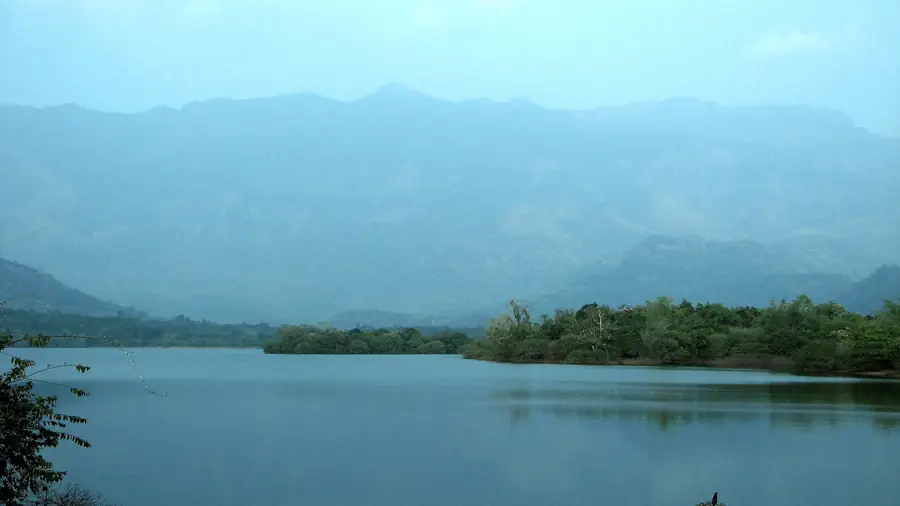
Pechiparai Dam is 60 km from Kanyakumari, built in 1906 on the Kodayar river. Garden ₹10, boating ₹100, open 9 am to 5.30 pm. When the reservoir is full.
 55 km
55 kmA broad 50 ft curtain on the Kodayar river, 55 km west. Strong June to January, often dry in summer.
Thirparappu Falls is 55 km from Kanyakumari and flows strongly June to January. Entry ₹10, open 8 am to 6 pm. We say which months it runs dry.
 60 km
60 kmMathur Aqueduct
Mathur Aqueduct is 60 km from Kanyakumari, 115 ft high and about 1 km long. Entry ₹10, open 9 am to 6 pm. How to walk the trough and when it is empty.
Want Kodayar Falls at the right hour?
We know when the queue is short and when the light is good. One message and it is in your plan.